1936–2025
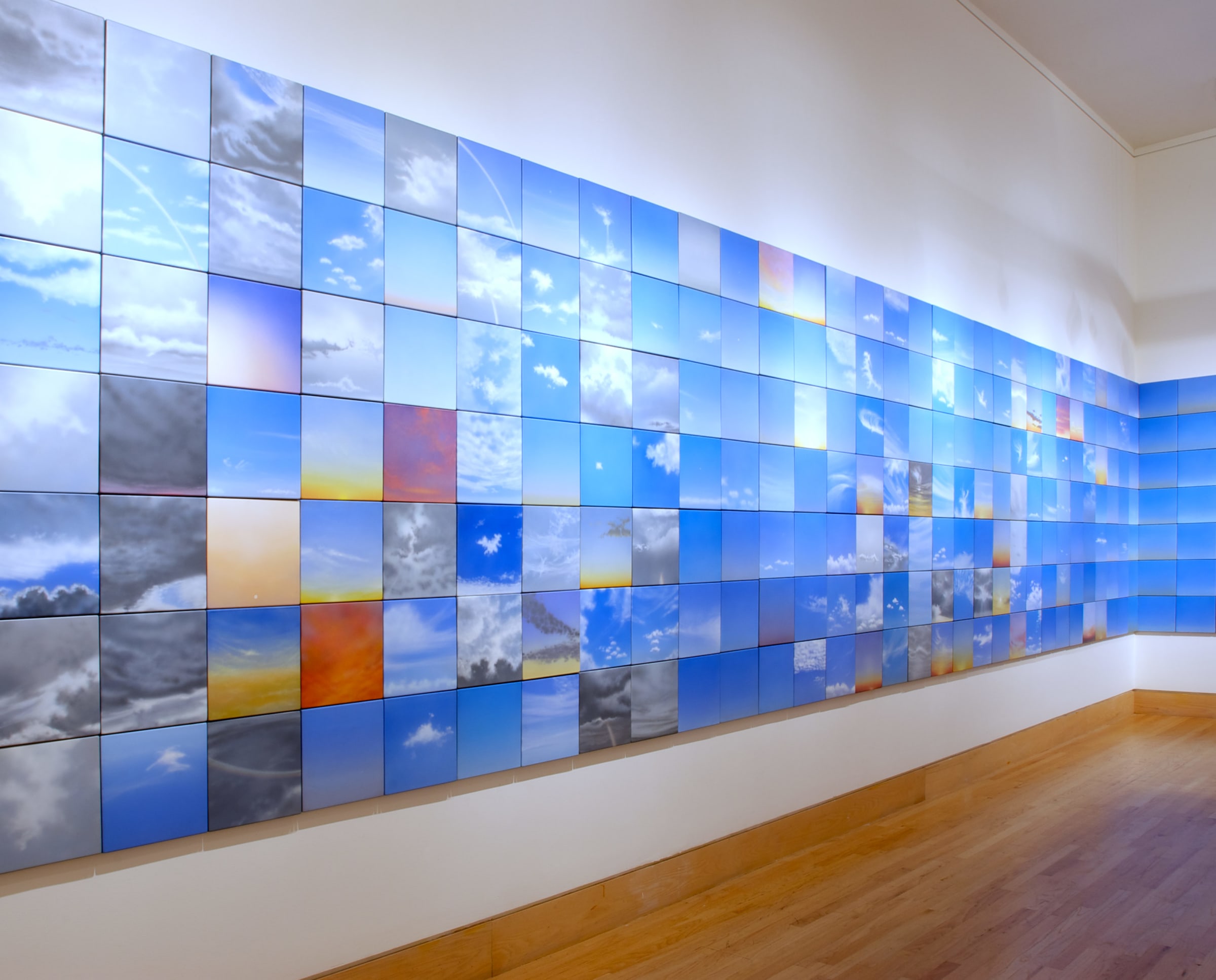
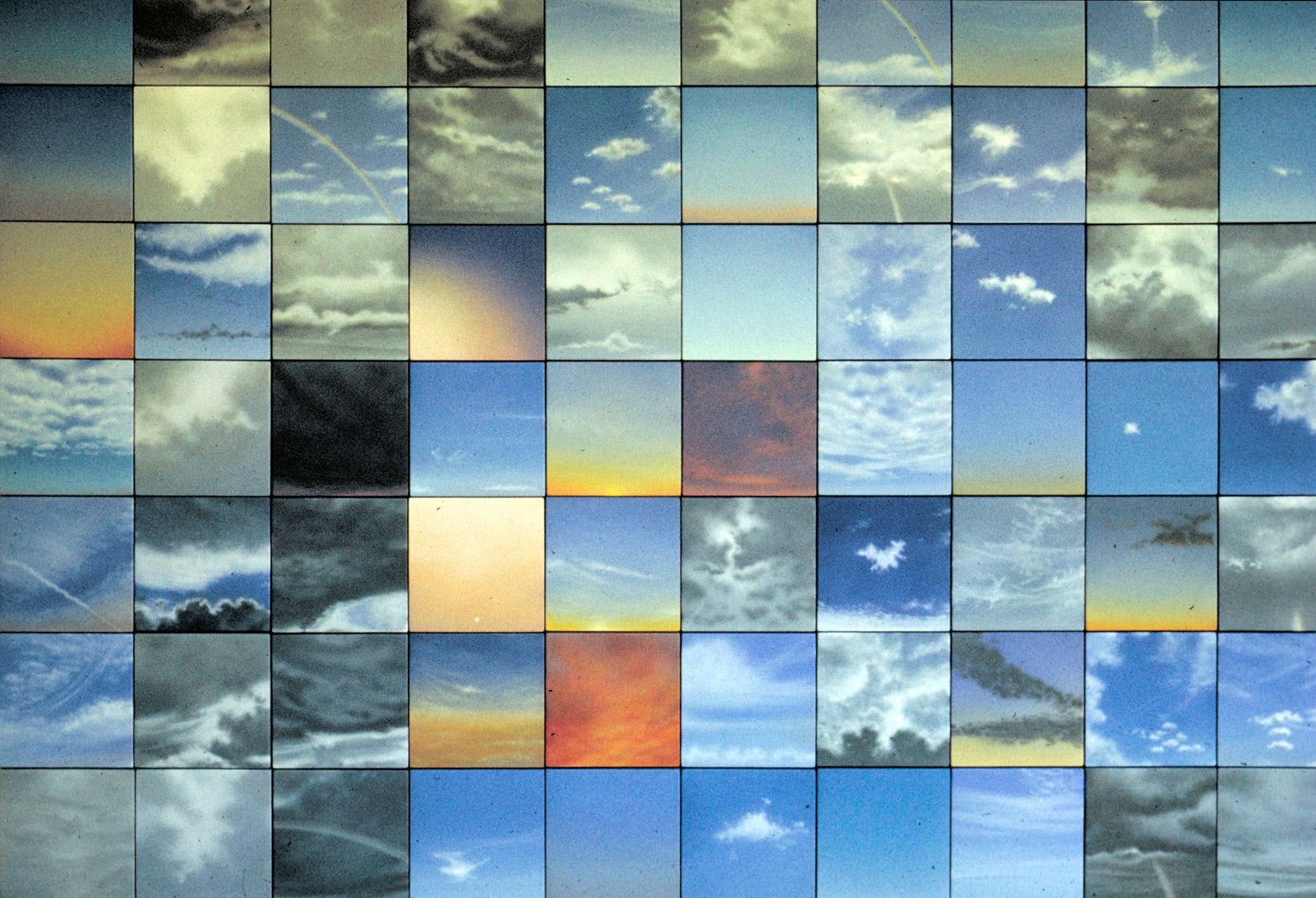
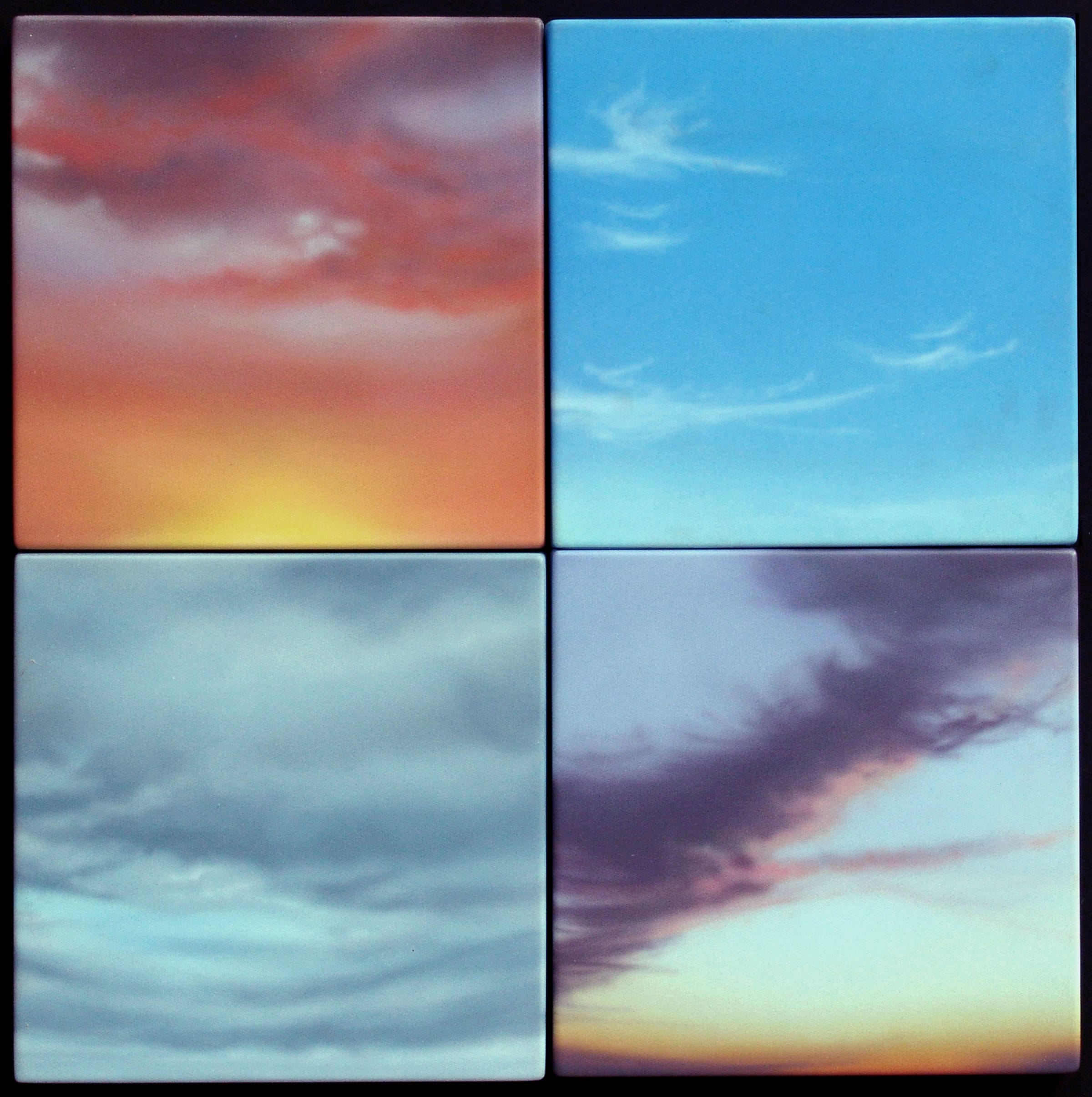
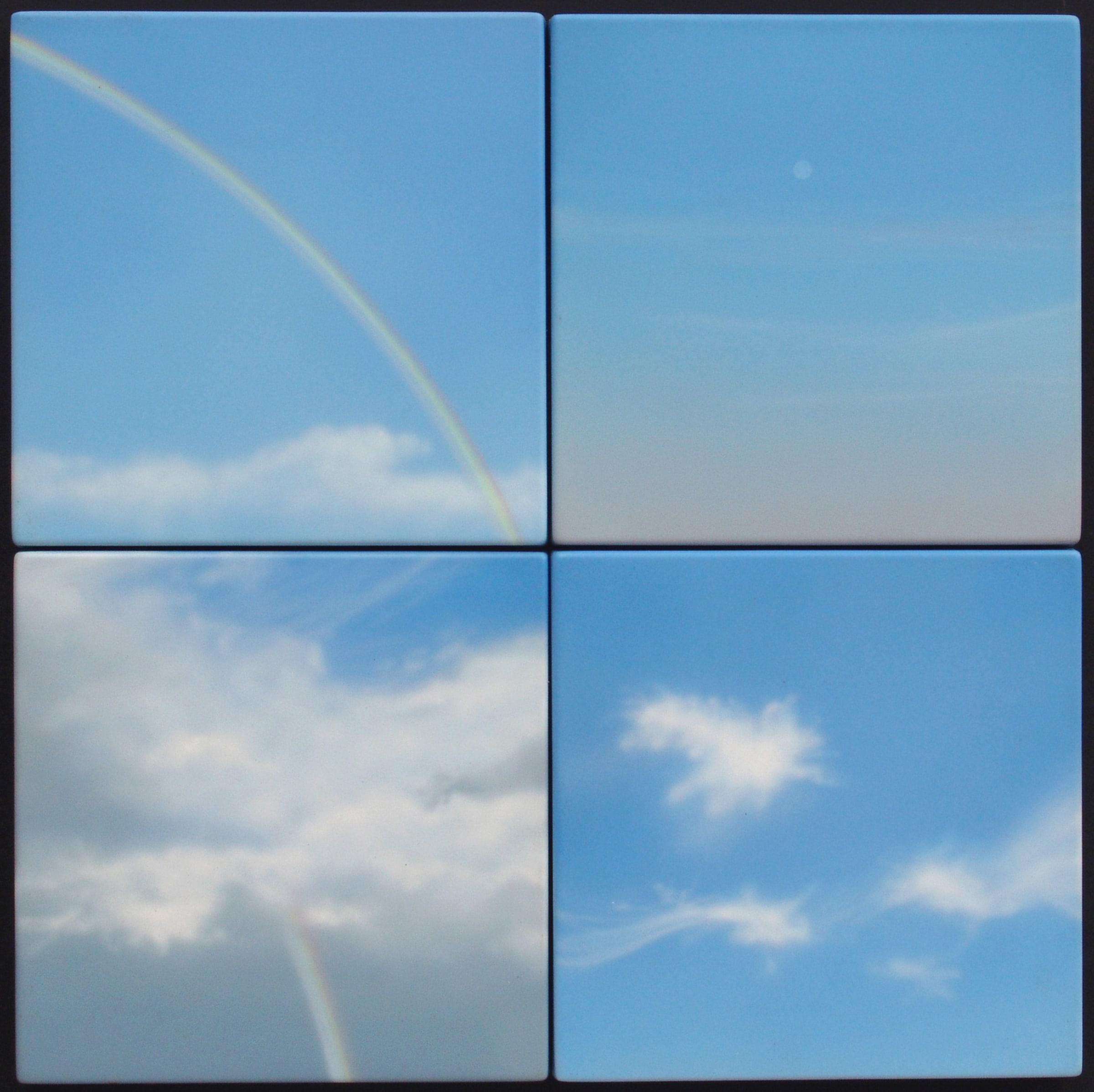
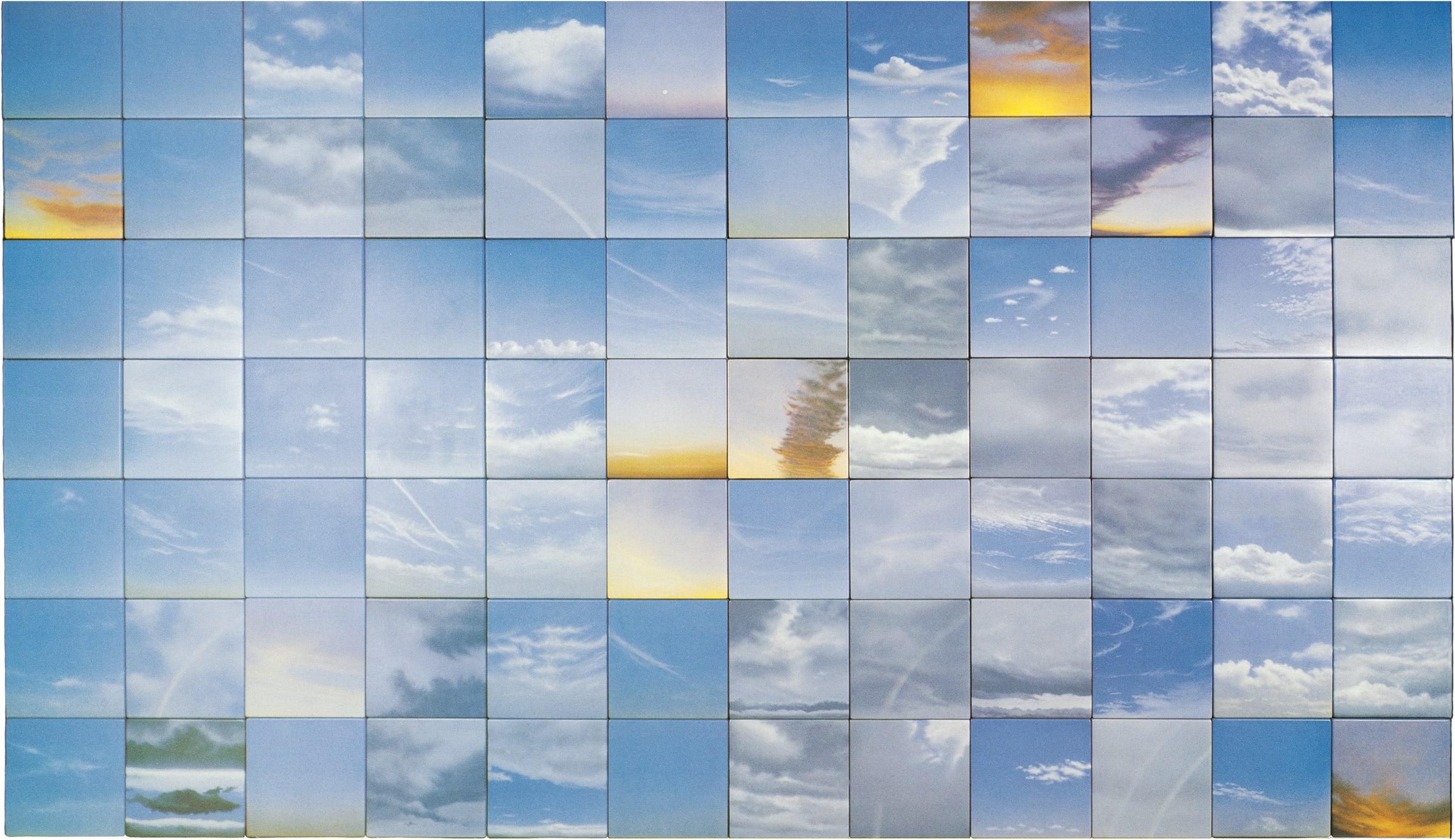
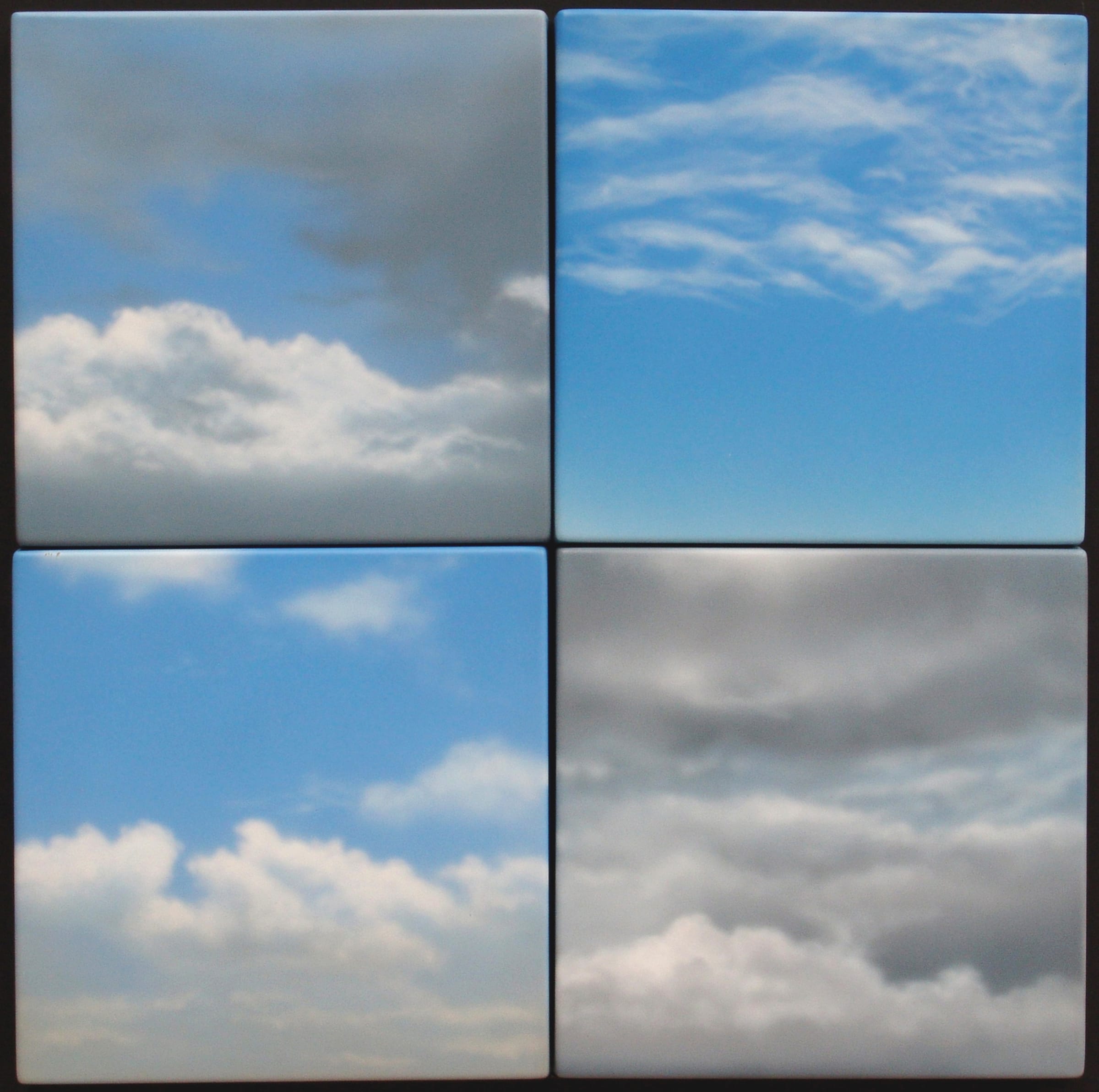
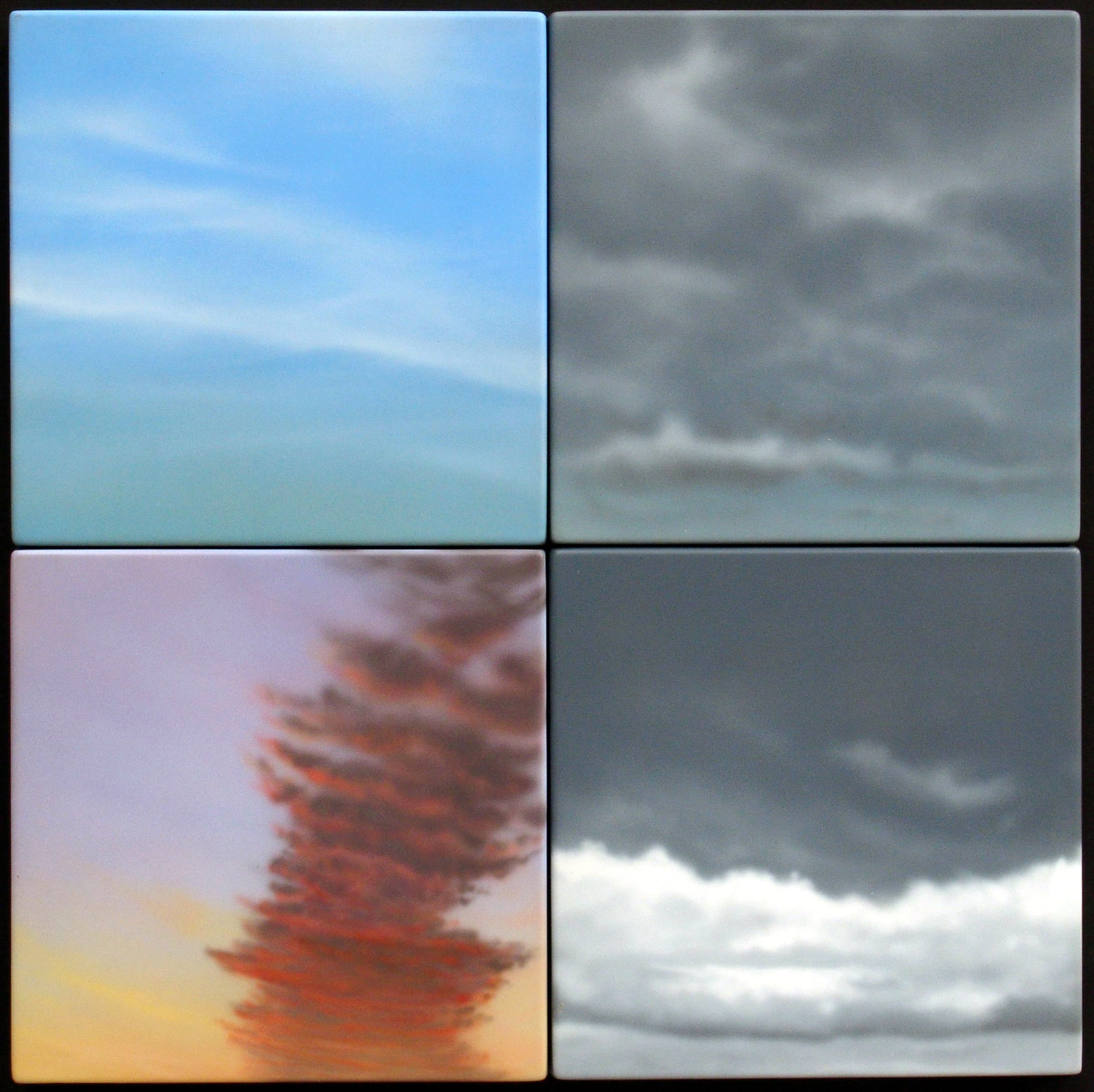
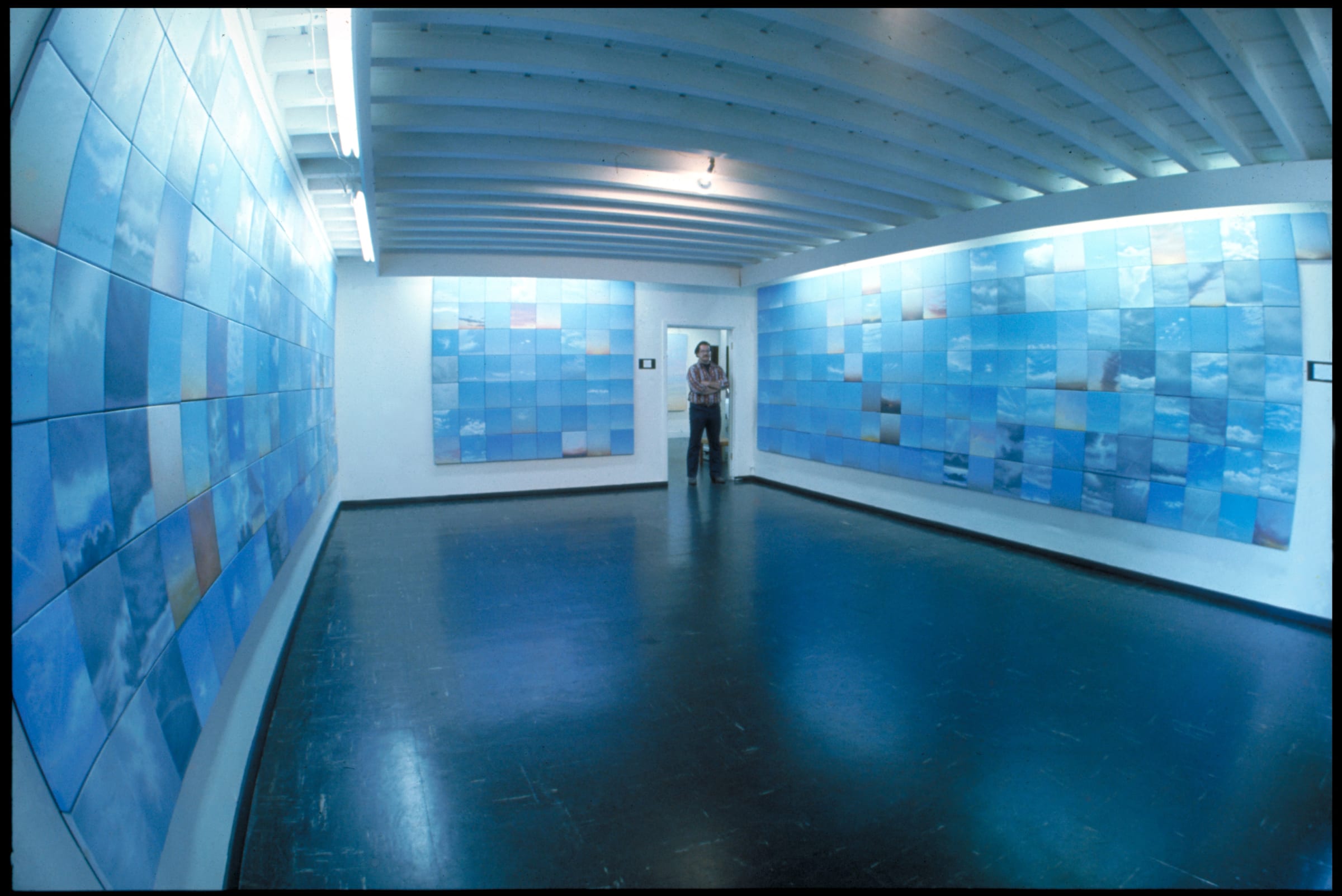
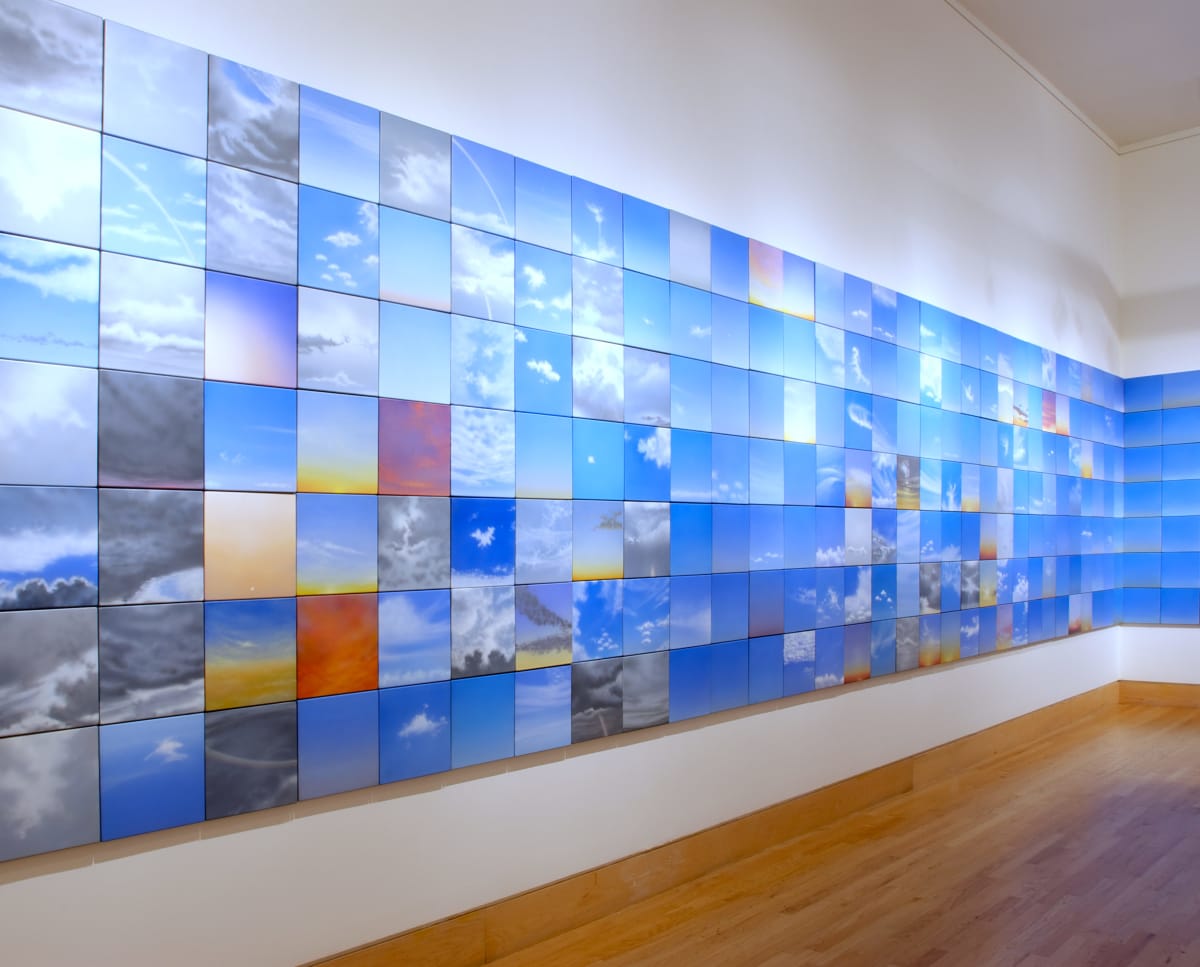
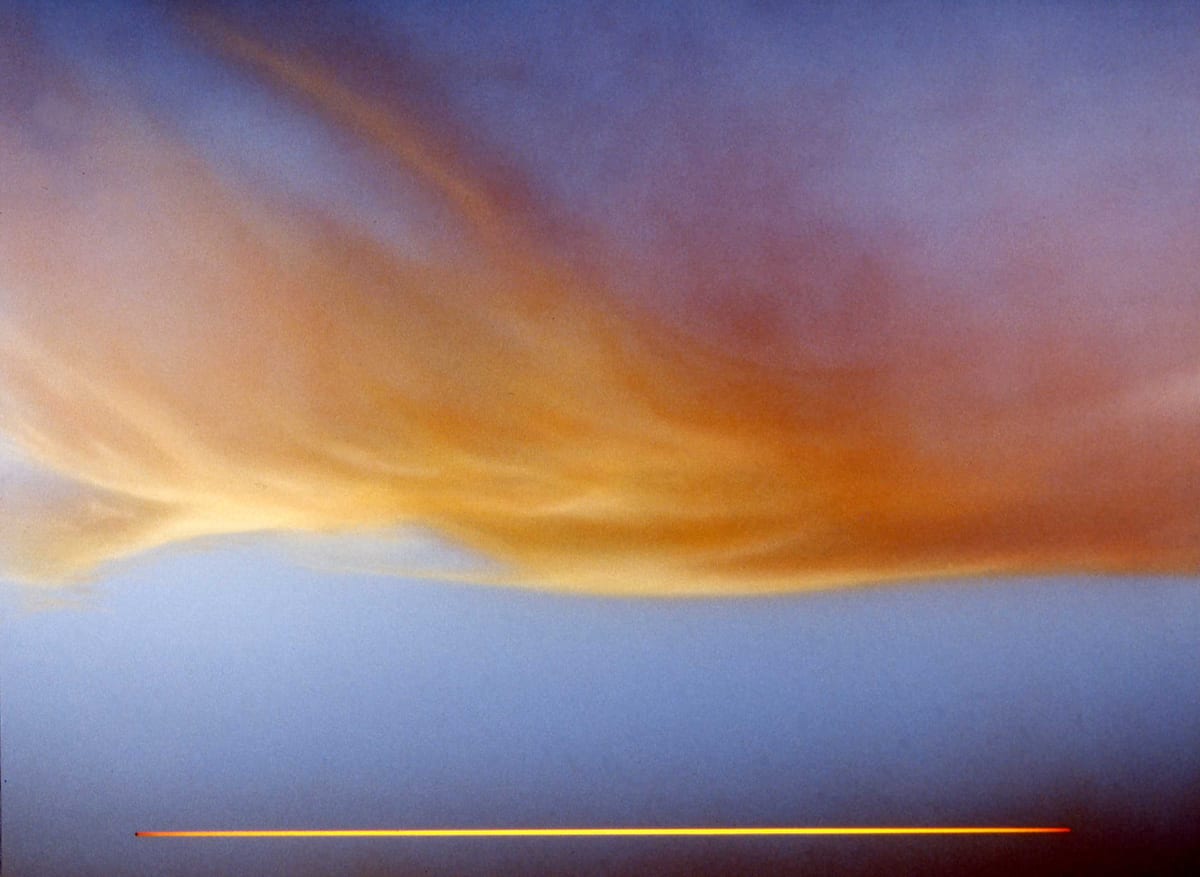
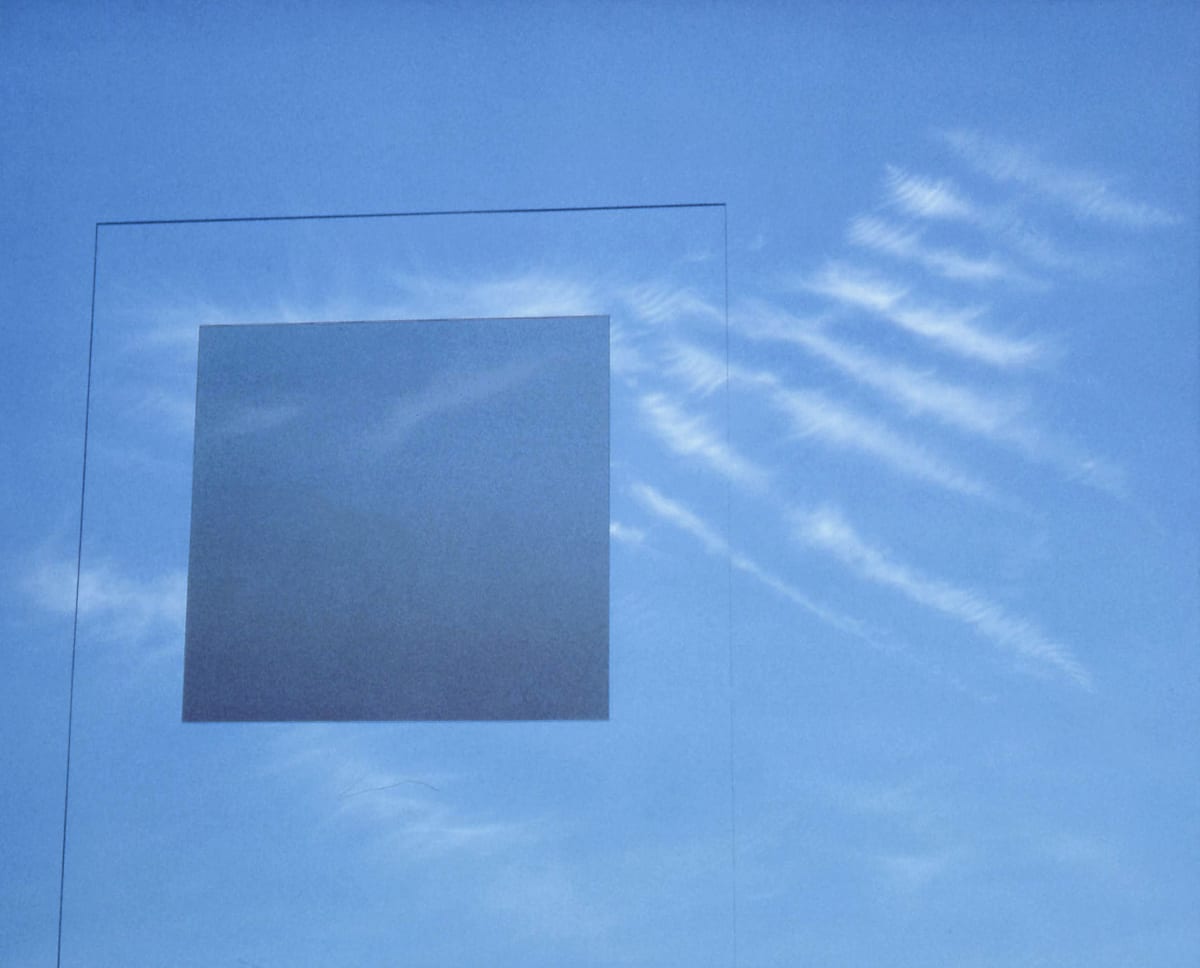
One of Salvatore Pecoraro’s most celebrated and influential works, 365 Skies established him as a major voice in California contemporary art. Through 1970, he photographed and catalogued the sky once a day — at first spinning a homemade dial to randomize the hour, so he would not simply collect pretty sunsets — recording for each frame the date and day, time, lens setting, weather, direction, and location. Each slide then became an airbrushed painting on a vacuum-formed styrene panel, one foot square and an inch deep. Assembled, the grid stood seven panels high for the days of the week and 52 panels across for the weeks of the year, hung on 208 nails: 52 feet of wall, and a visual diary of a single year. December 31 had to be set off to one side, because 365 will not divide evenly into anything.
The project demanded extraordinary discipline and technical innovation. Pecoraro had a custom mold built so the panels could be vacuum-formed in white high-impact styrene. He rigged a cardboard projection box that let him read a slide’s color accurately in a lit room, and mixed dozens of colors by the jarful — cerulean, cobalt, ultramarine and phthalo blues intermixed and tinted with titanium white — to match each day’s particular atmosphere. He began painting in March 1970 and finished the last sky on January 17, 1971, having lost two weeks in November after his airbrush blew a fleck of dried acrylic into his eye.
The work debuted at the La Jolla Museum of Contemporary Art in April 1971. It drew widespread attention throughout the decade, exhibiting at the Oakland Museum, the de Saisset Museum at Santa Clara, and Otis Art Institute, and closing an episode of KABC’s A.M. Los Angeles over Joni Mitchell singing “Clouds.” Because every panel carries a date, viewers have always rediscovered their own lives inside it — birthdays, anniversaries, milestones, losses. For Pecoraro, one date mattered above the rest. On October 9, 1970, he stepped out of the maternity ward at Kaiser Santa Clara to photograph the sunset at the moment his son John was born. When the nurse went looking for him, his wife Diane told her, between contractions, “He’s probably outside taking a picture of the sky.”