1936–2025
In 1983 Salvatore Pecoraro went to Pietrasanta, in Tuscany, Italy, and everything changed. What caught him was not the finished sculptures, but the stone yards — marble cut, broken, stacked and left waiting, arranged by nothing more than convenience. He began drawing wall constructions based on those piles before he had even left Italy.
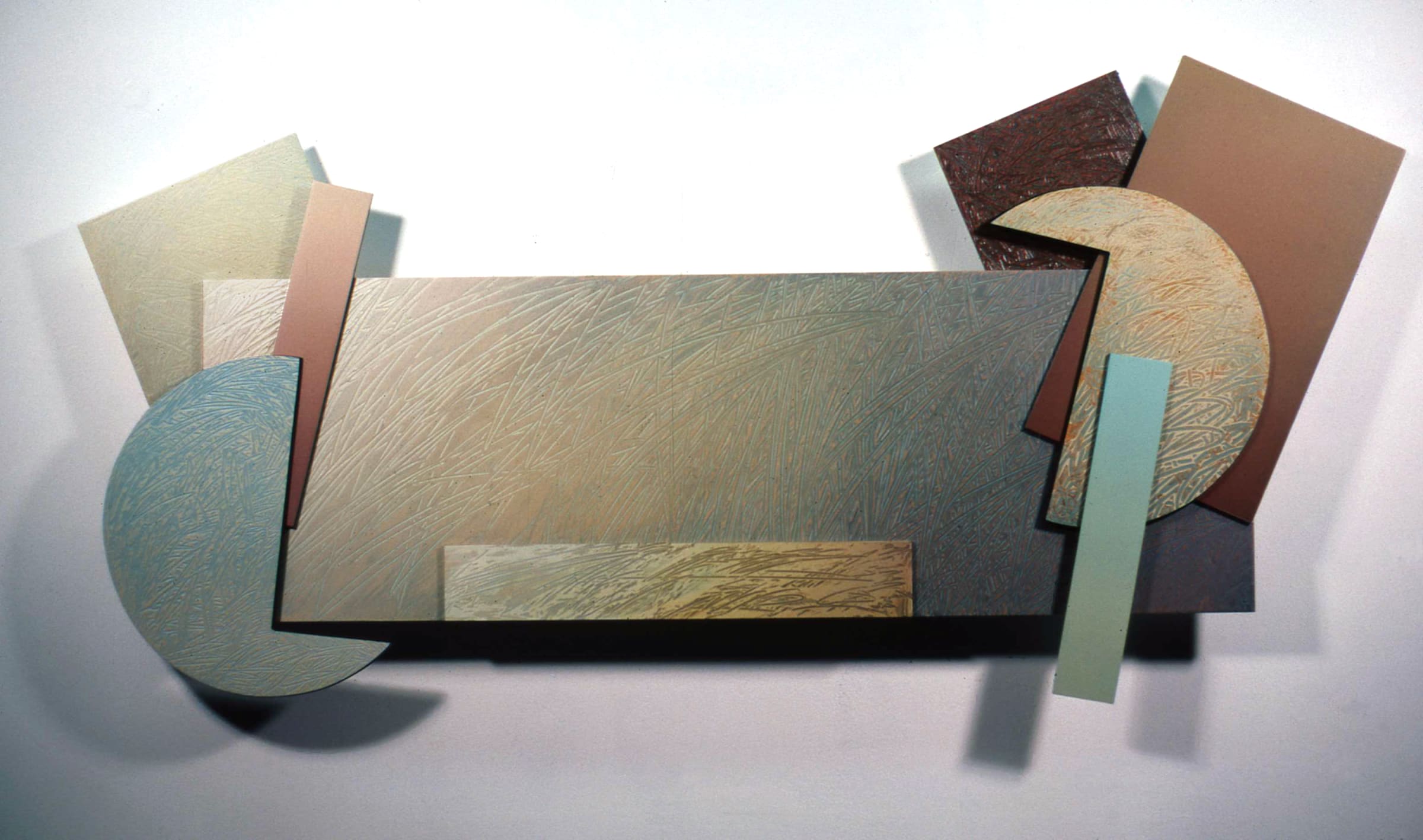
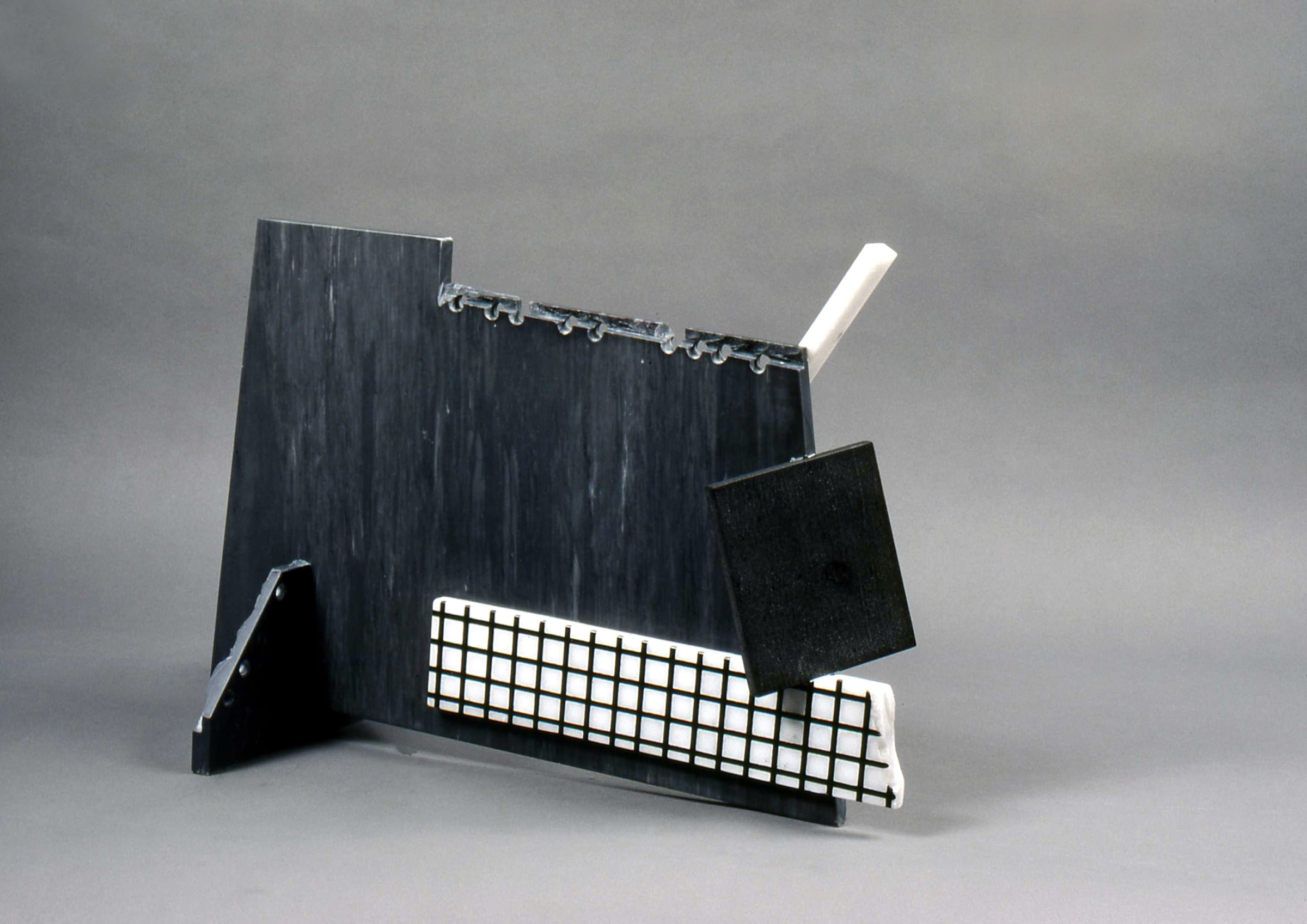
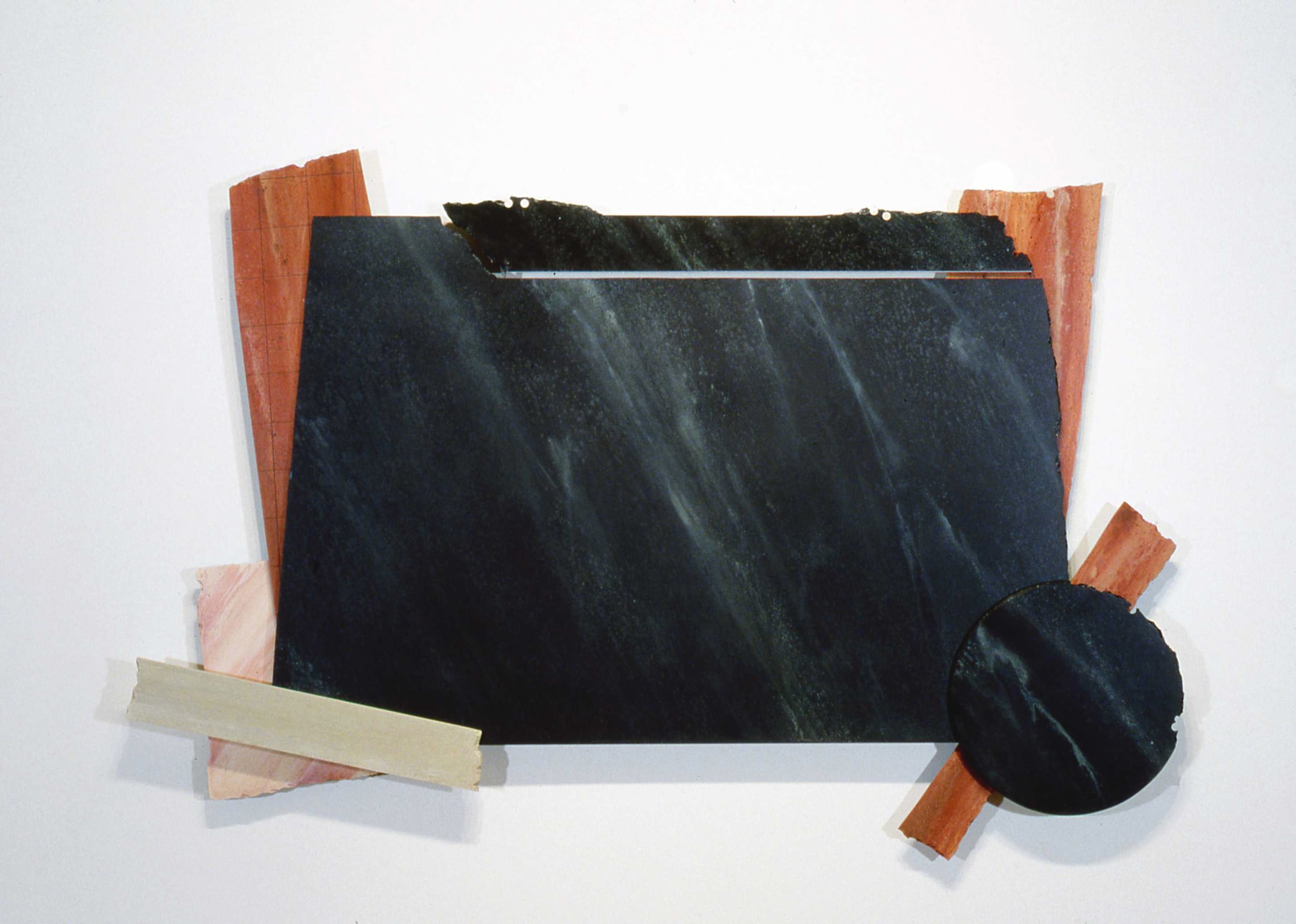
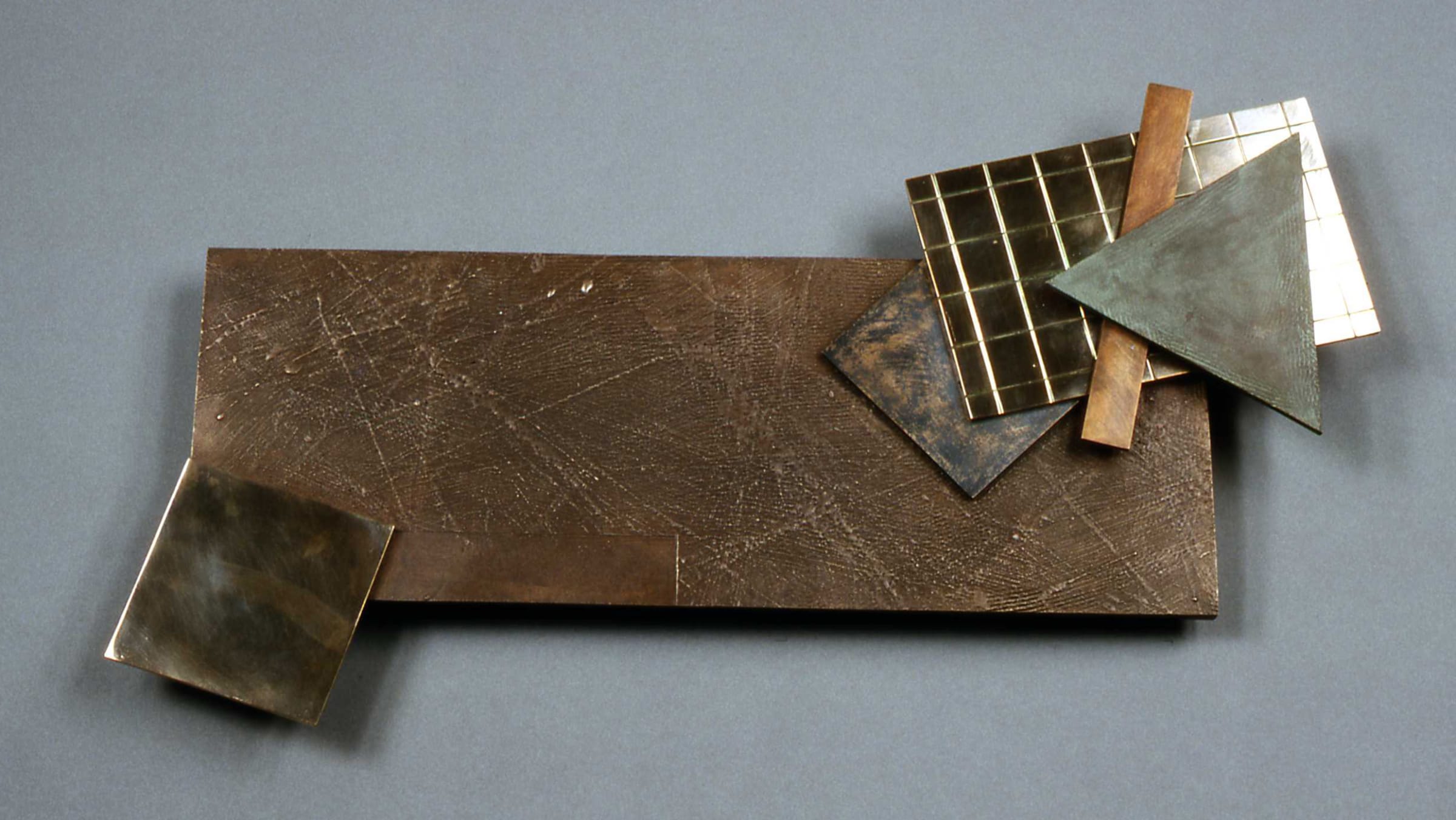
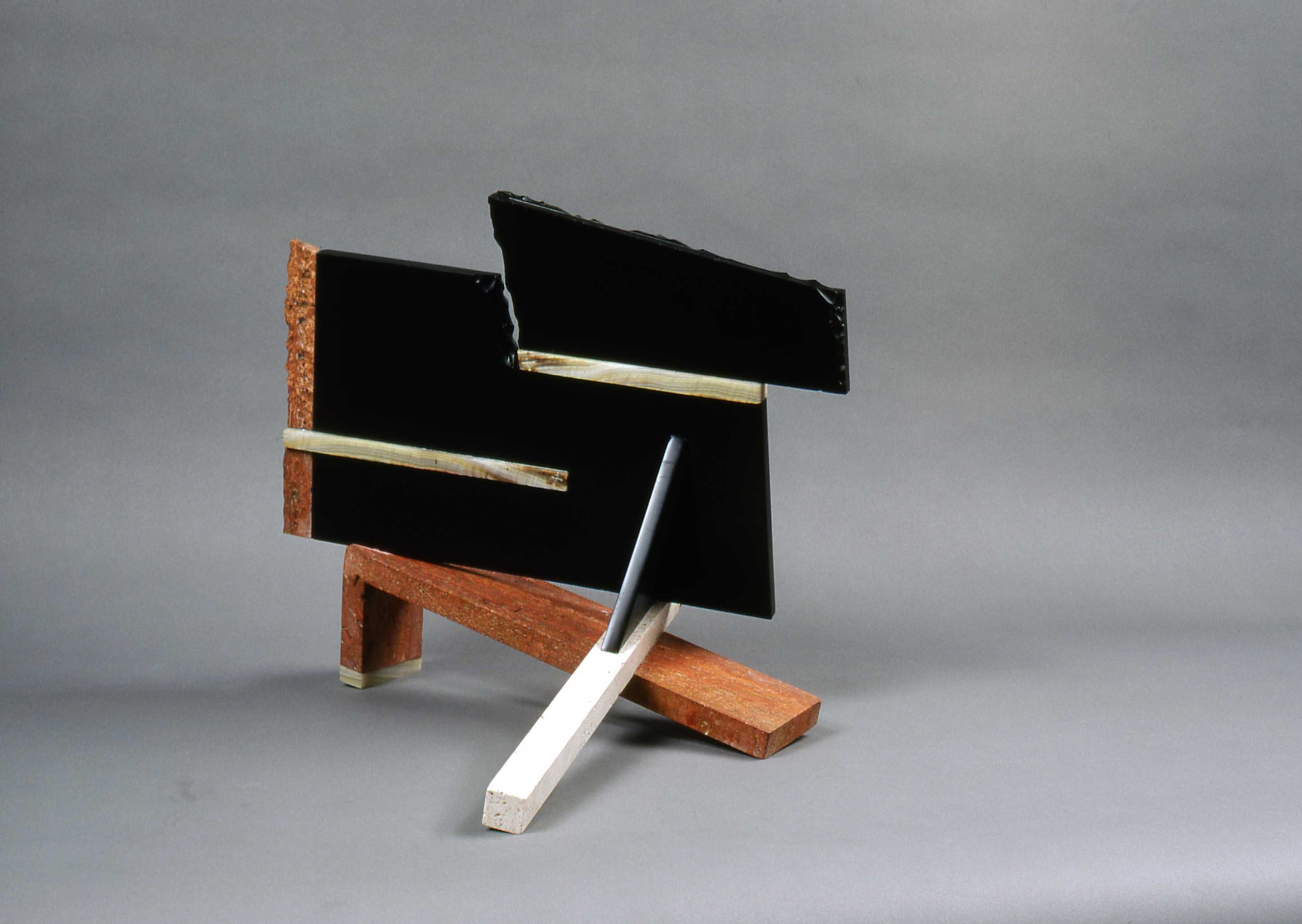
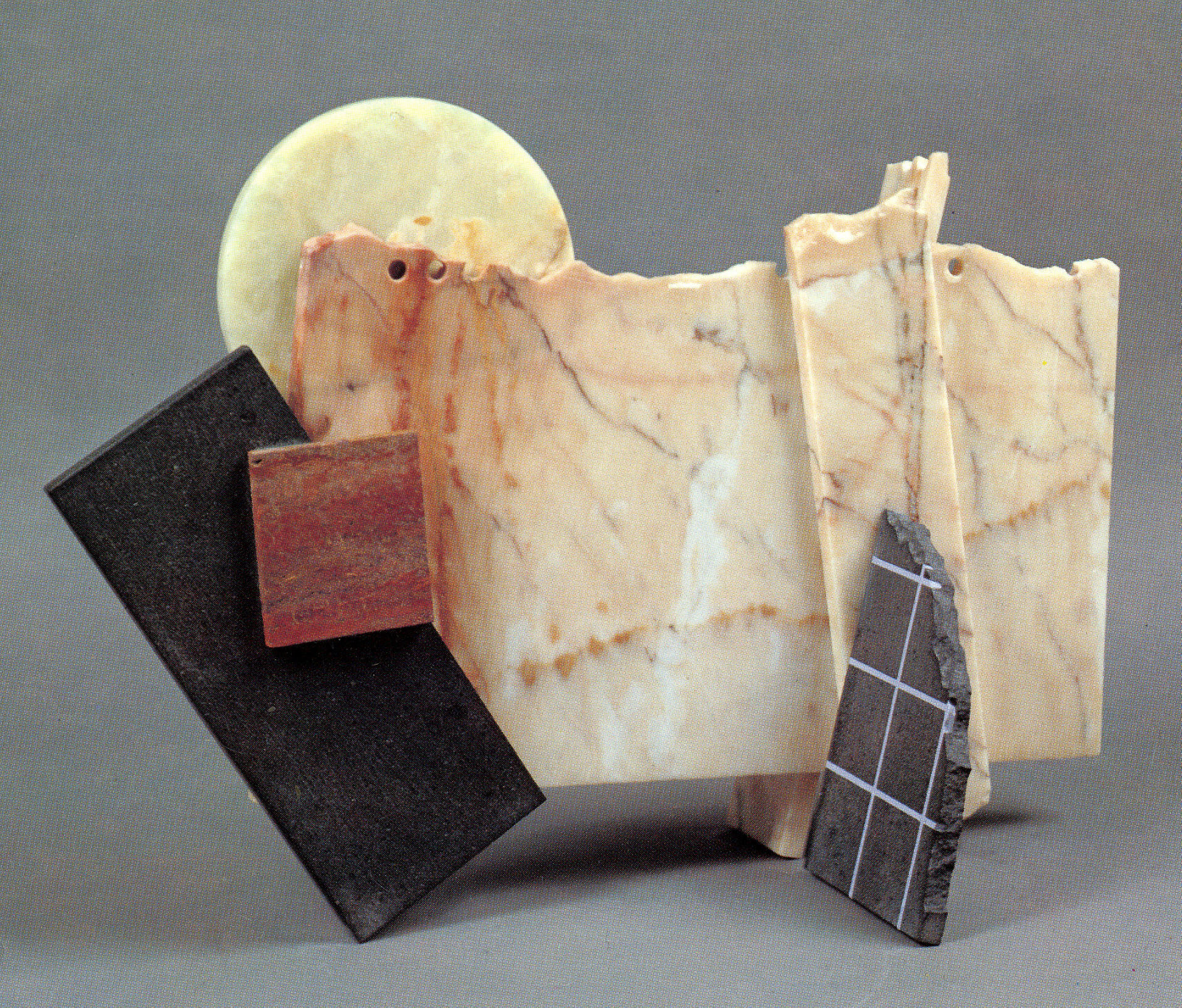
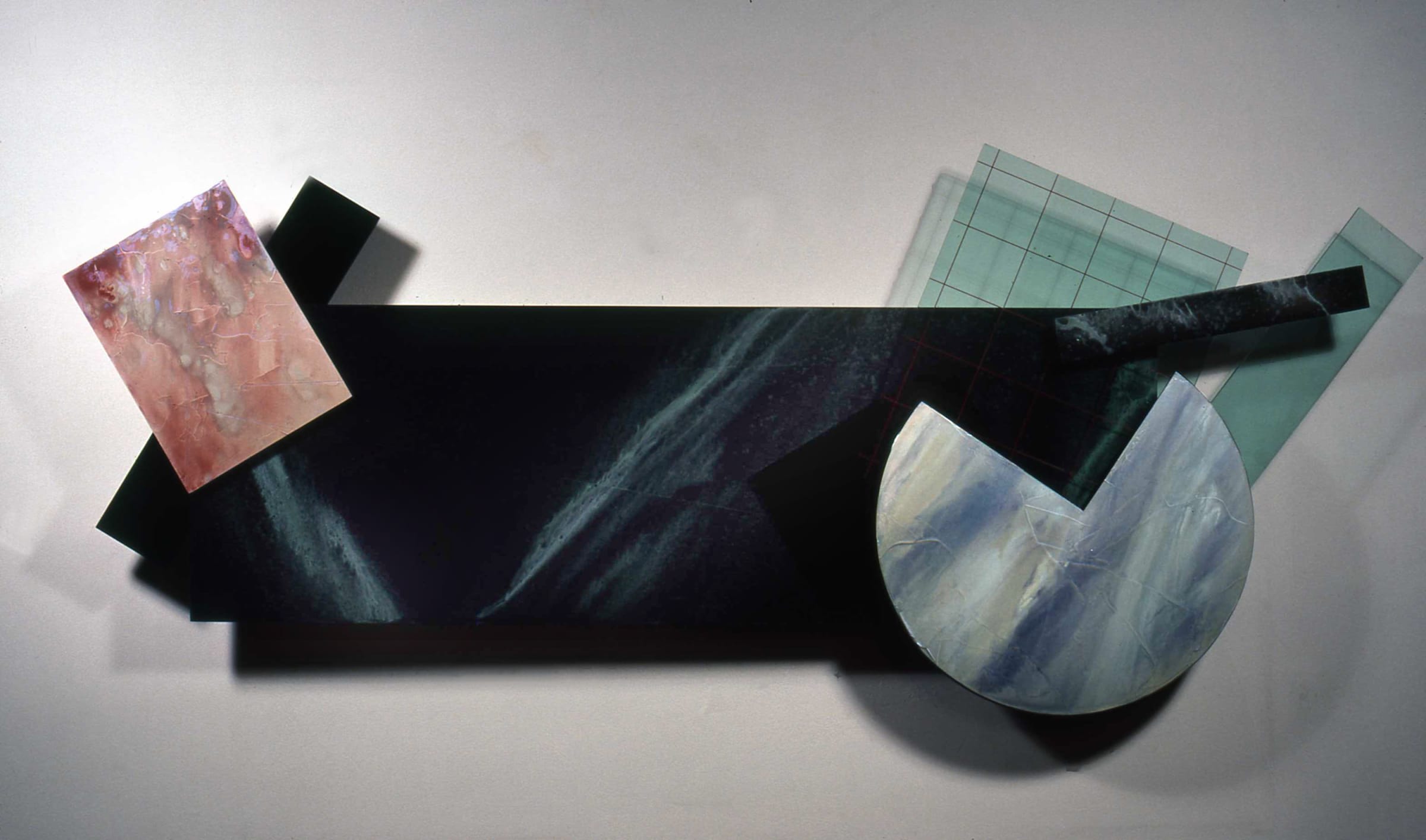
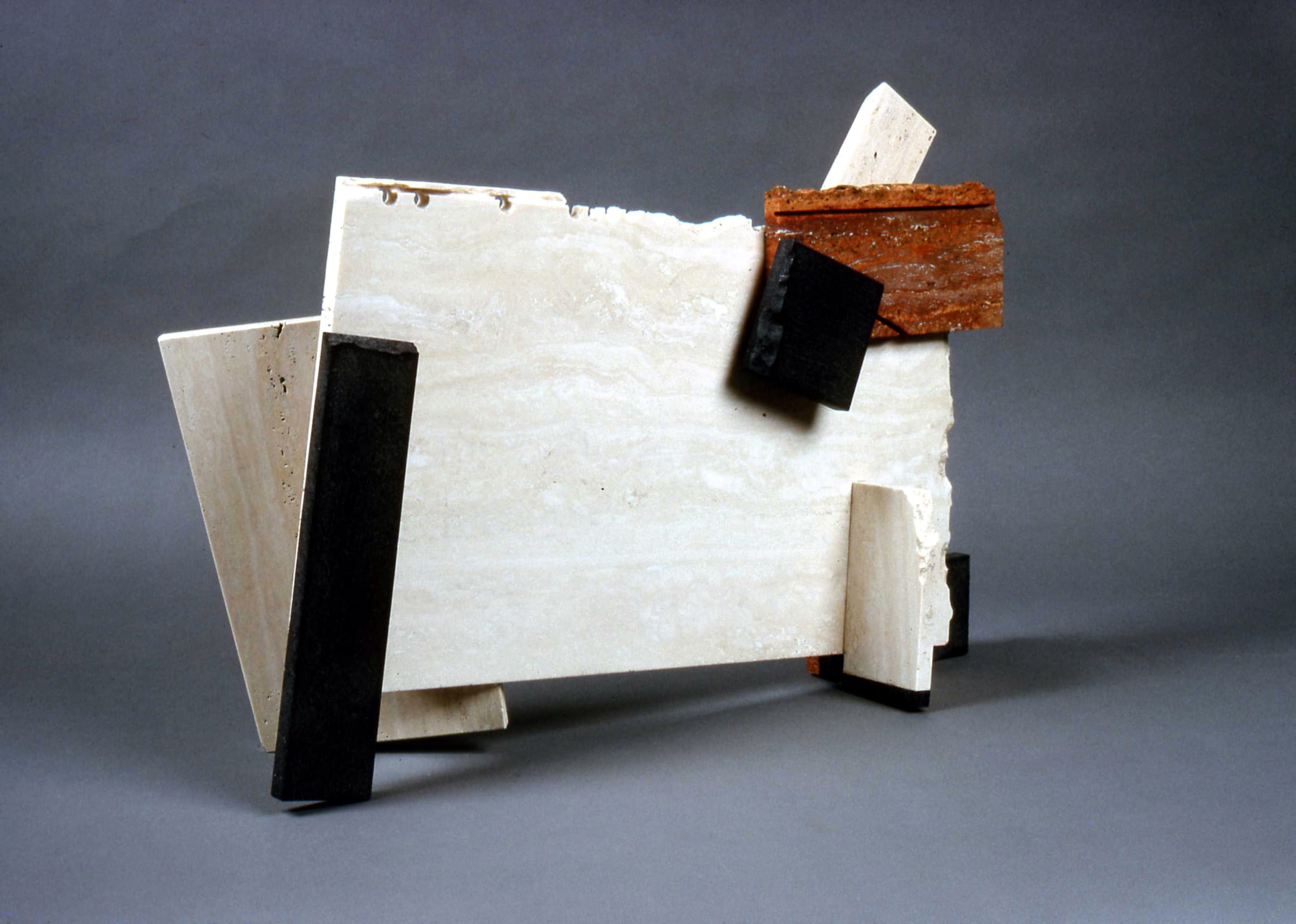
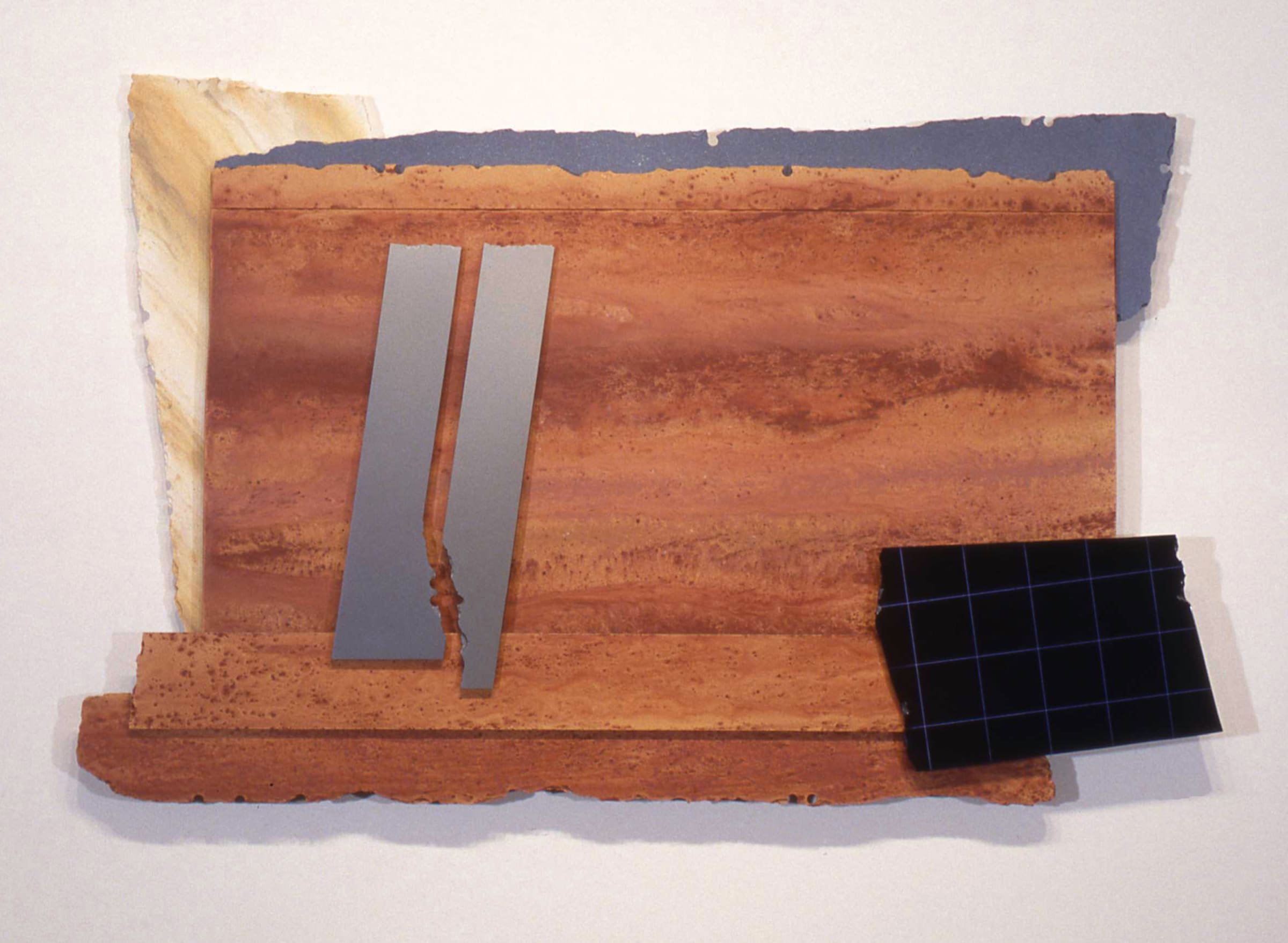
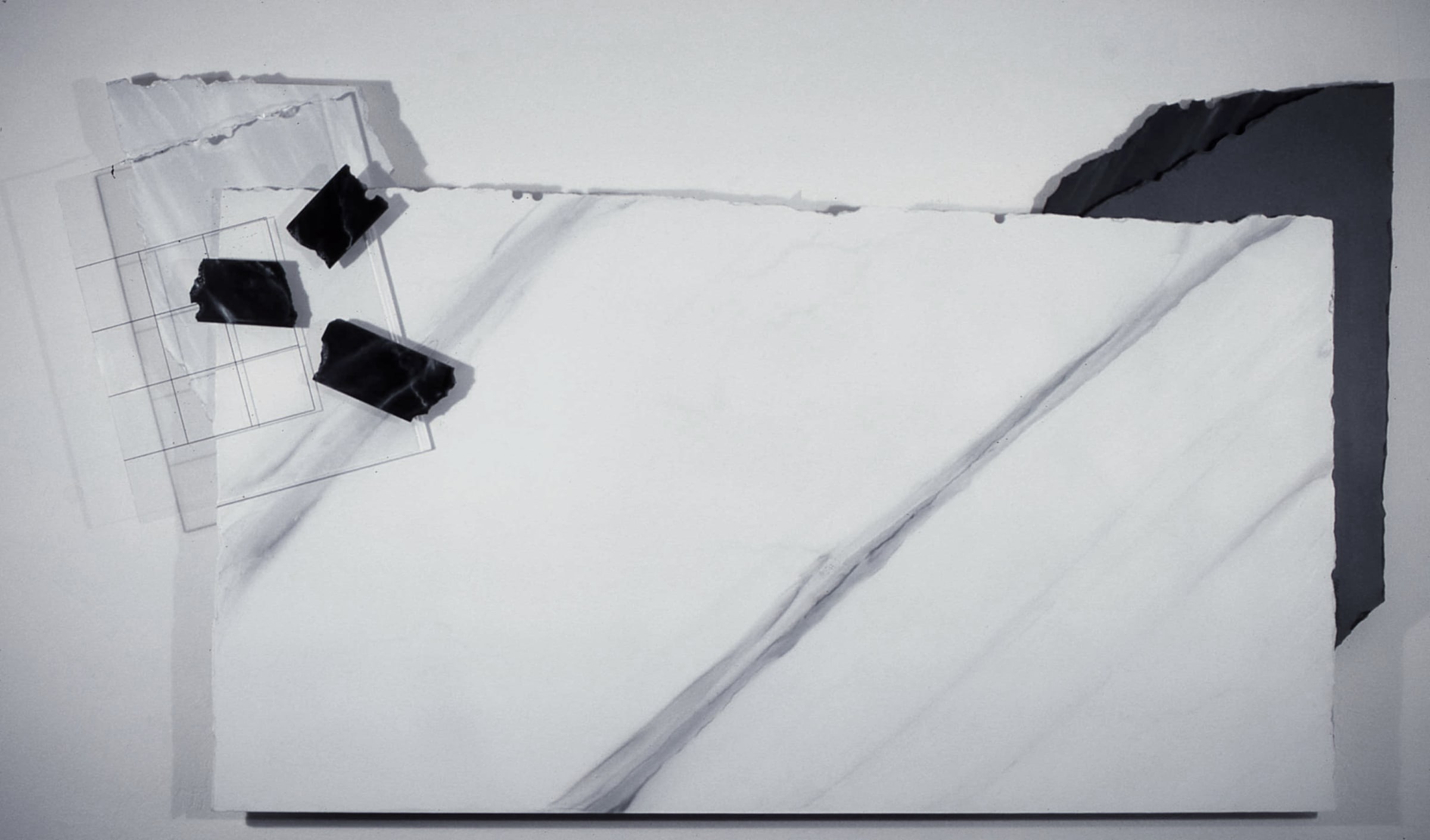
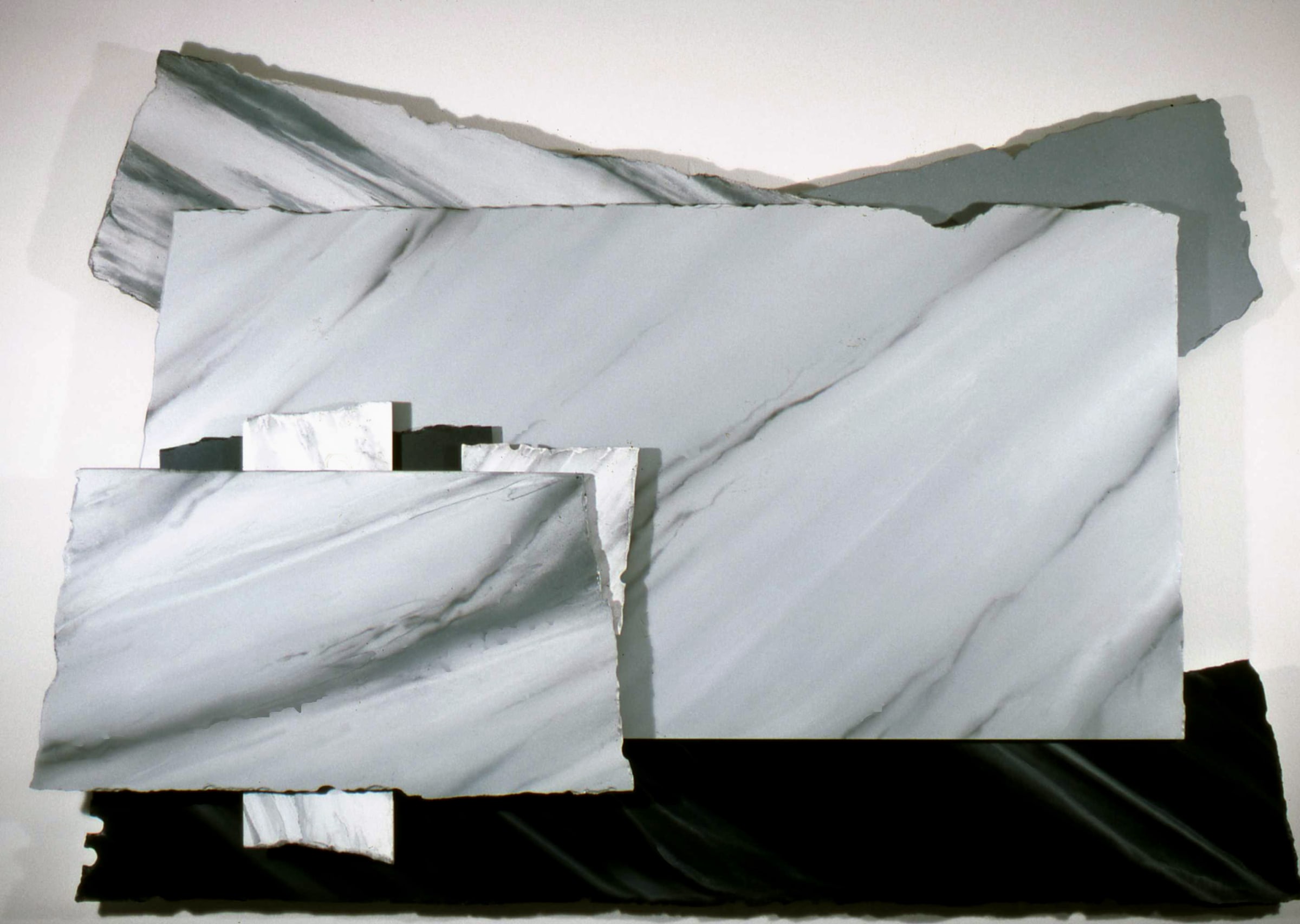
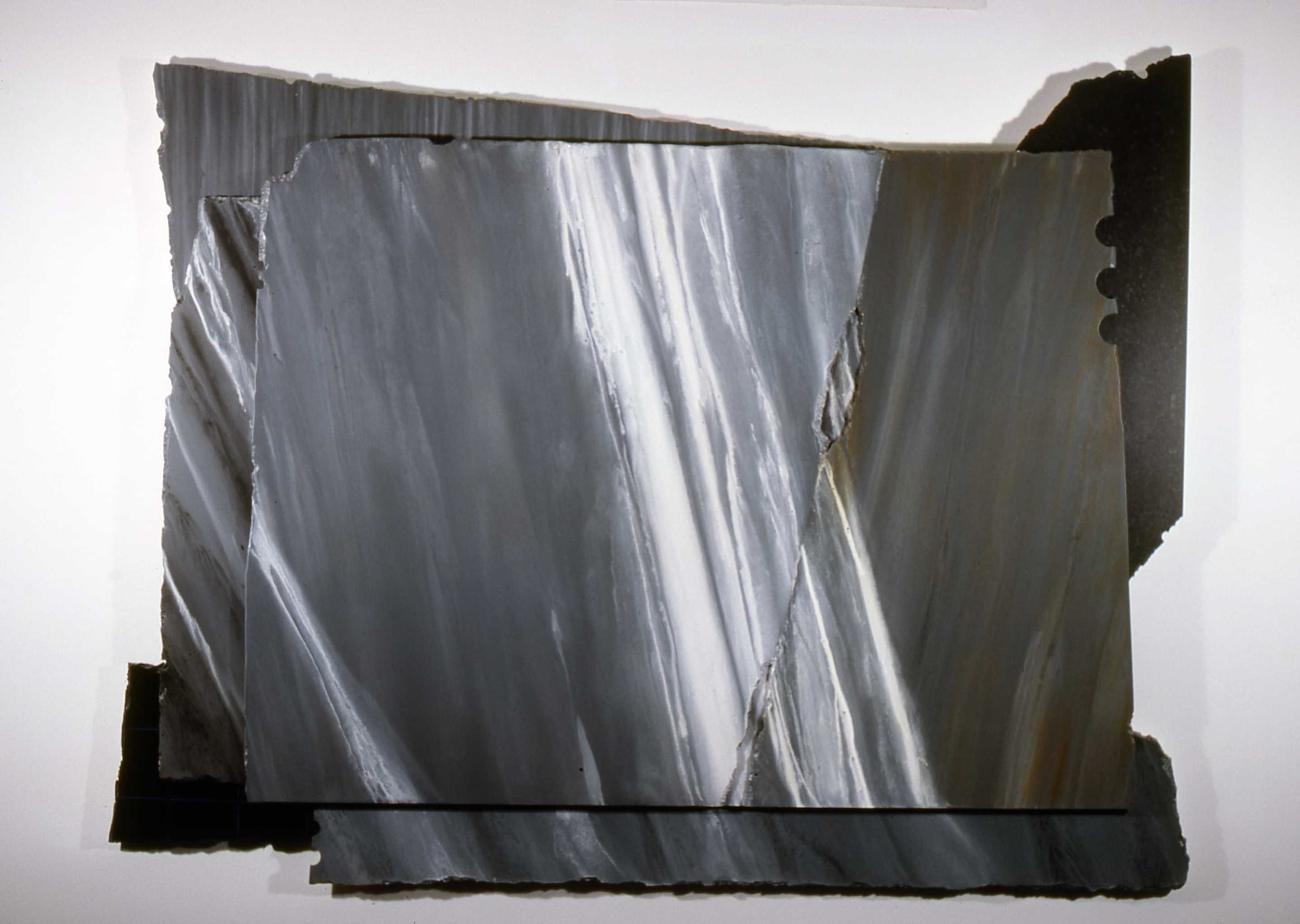
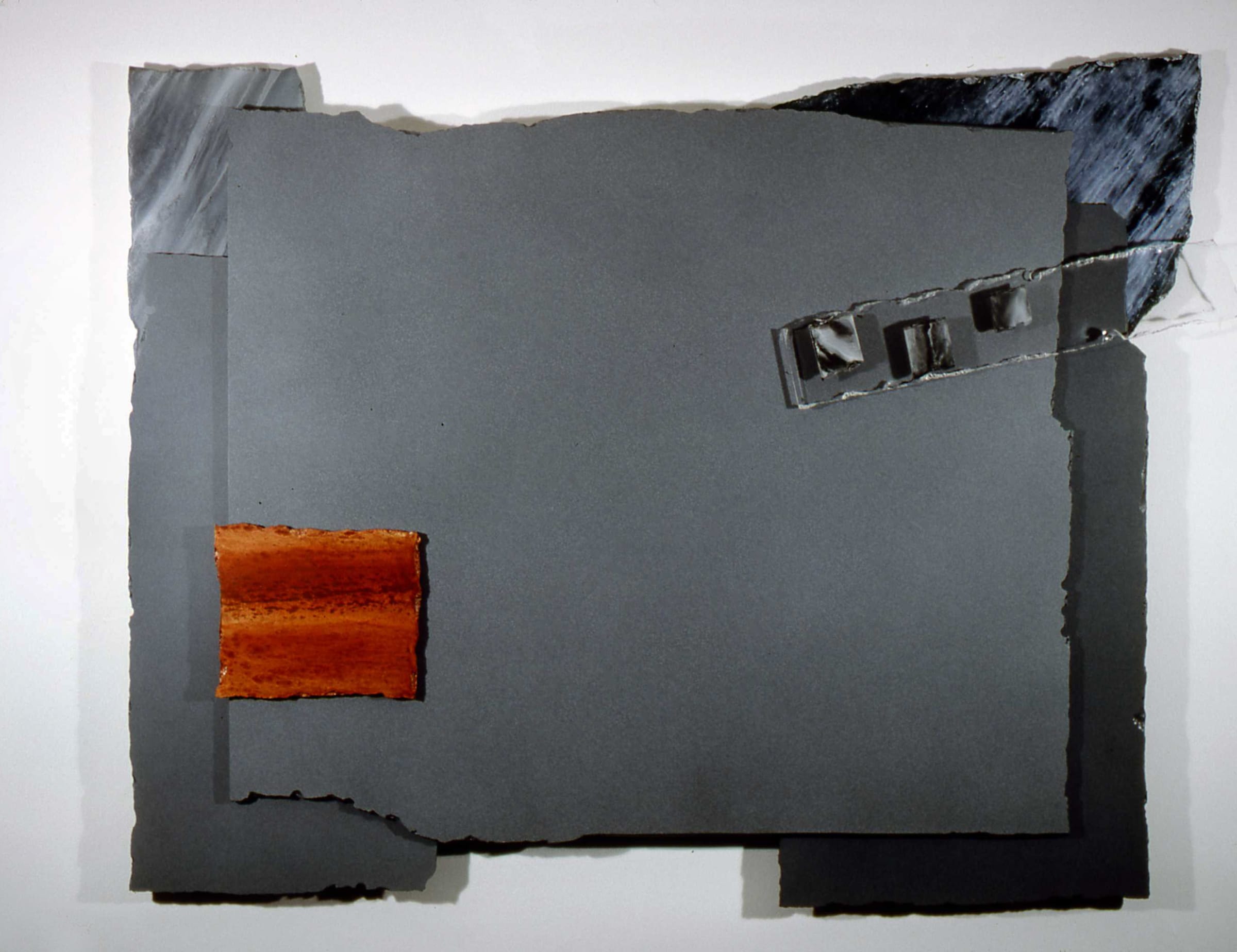
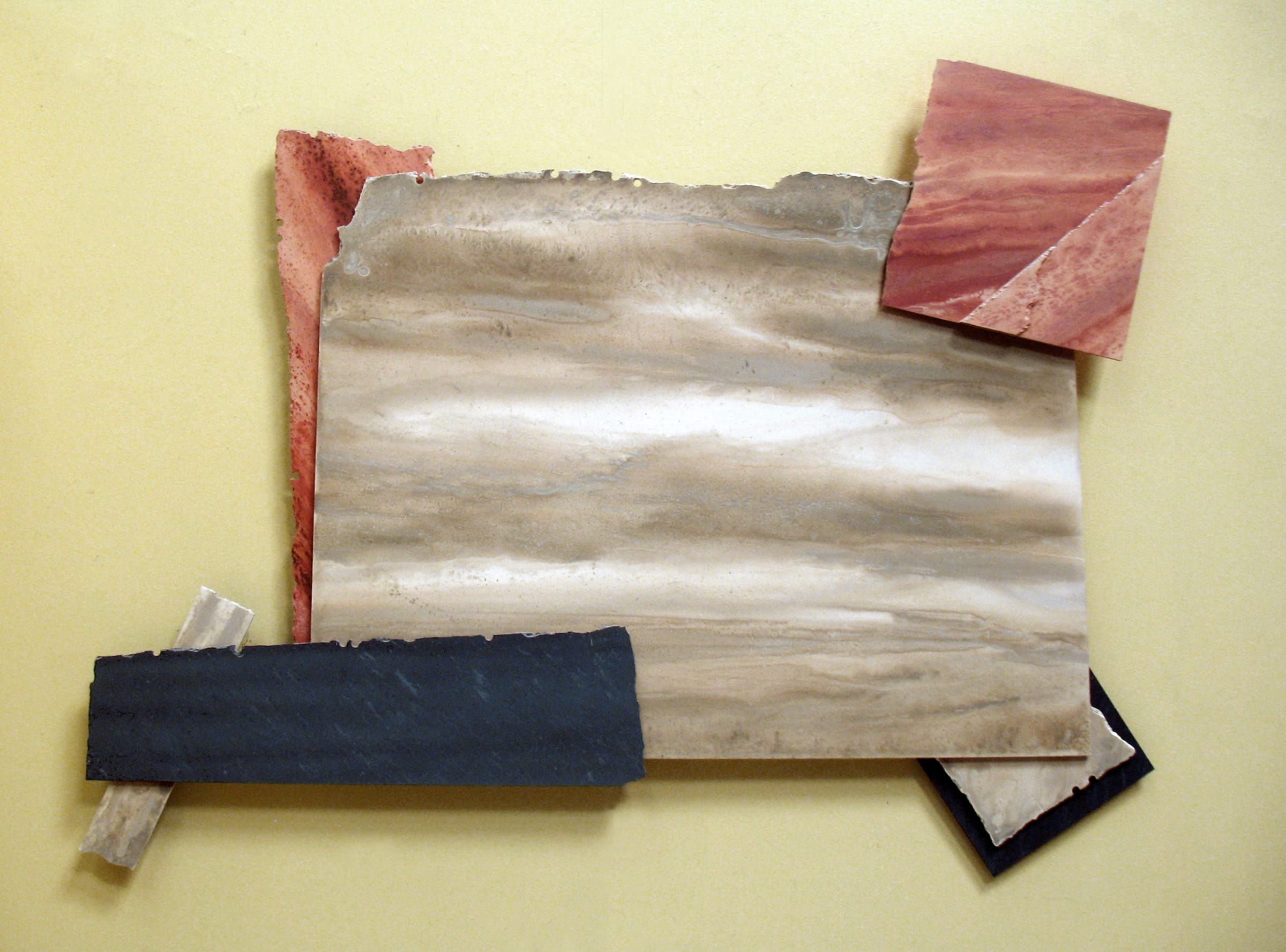
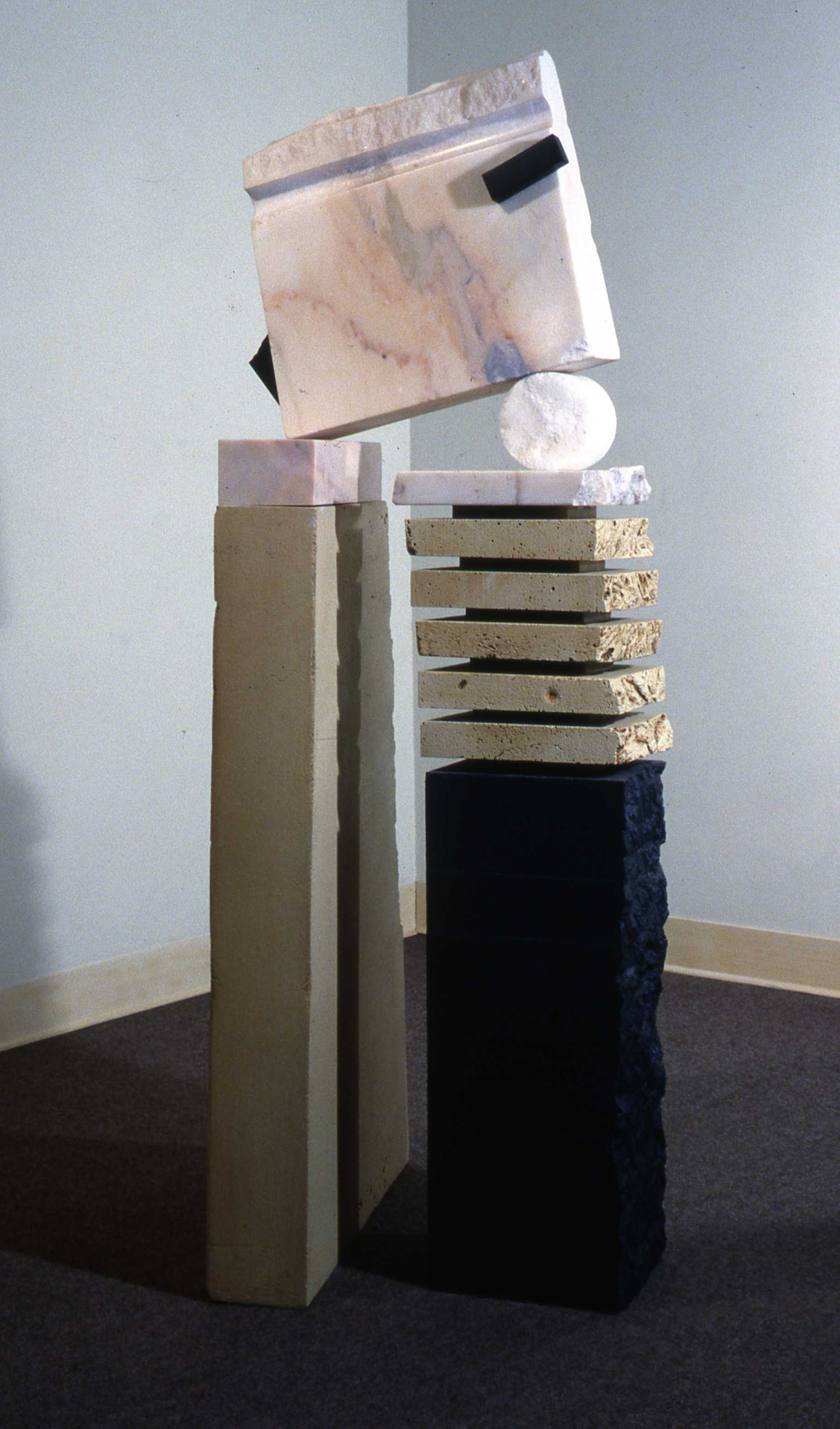
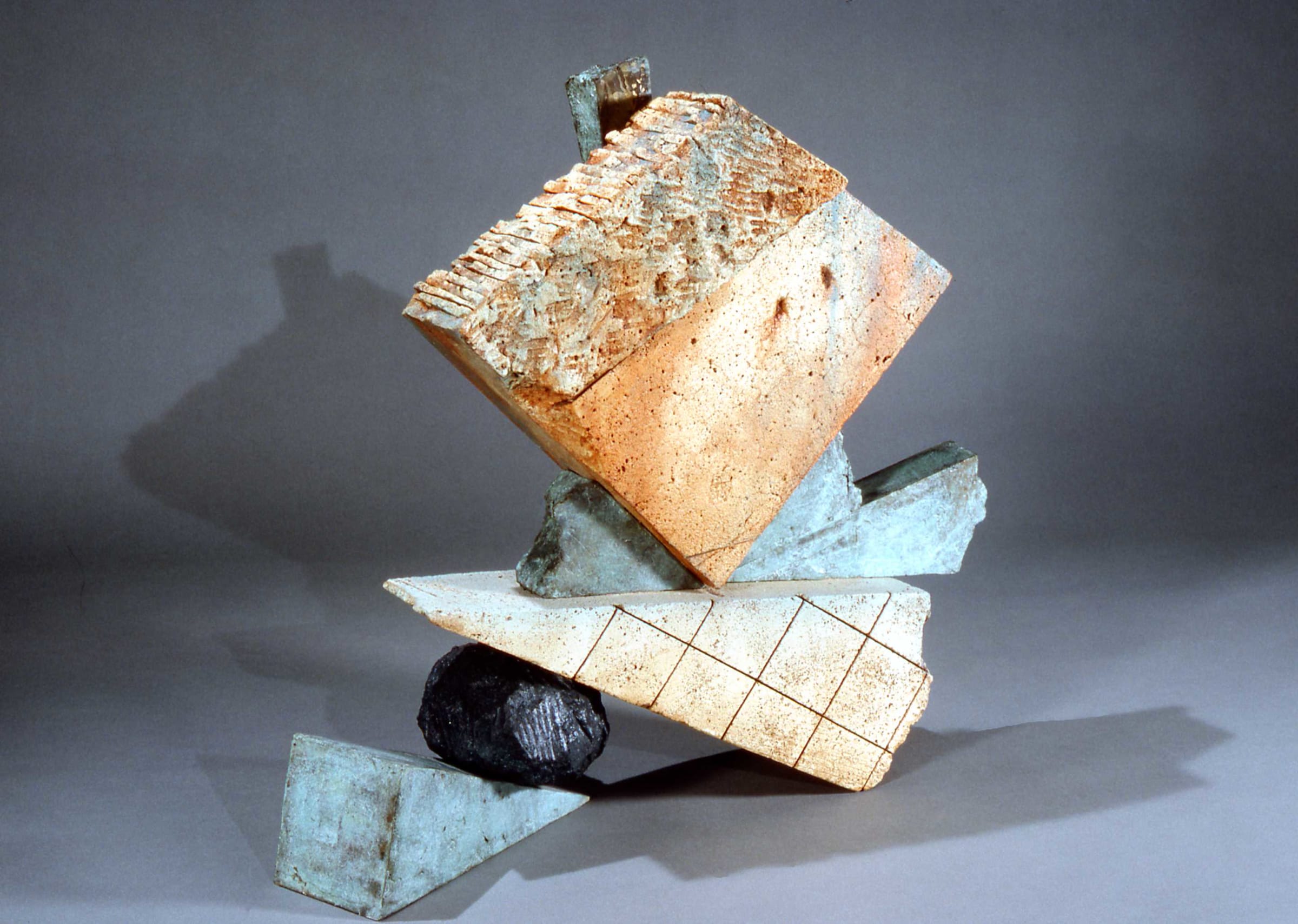
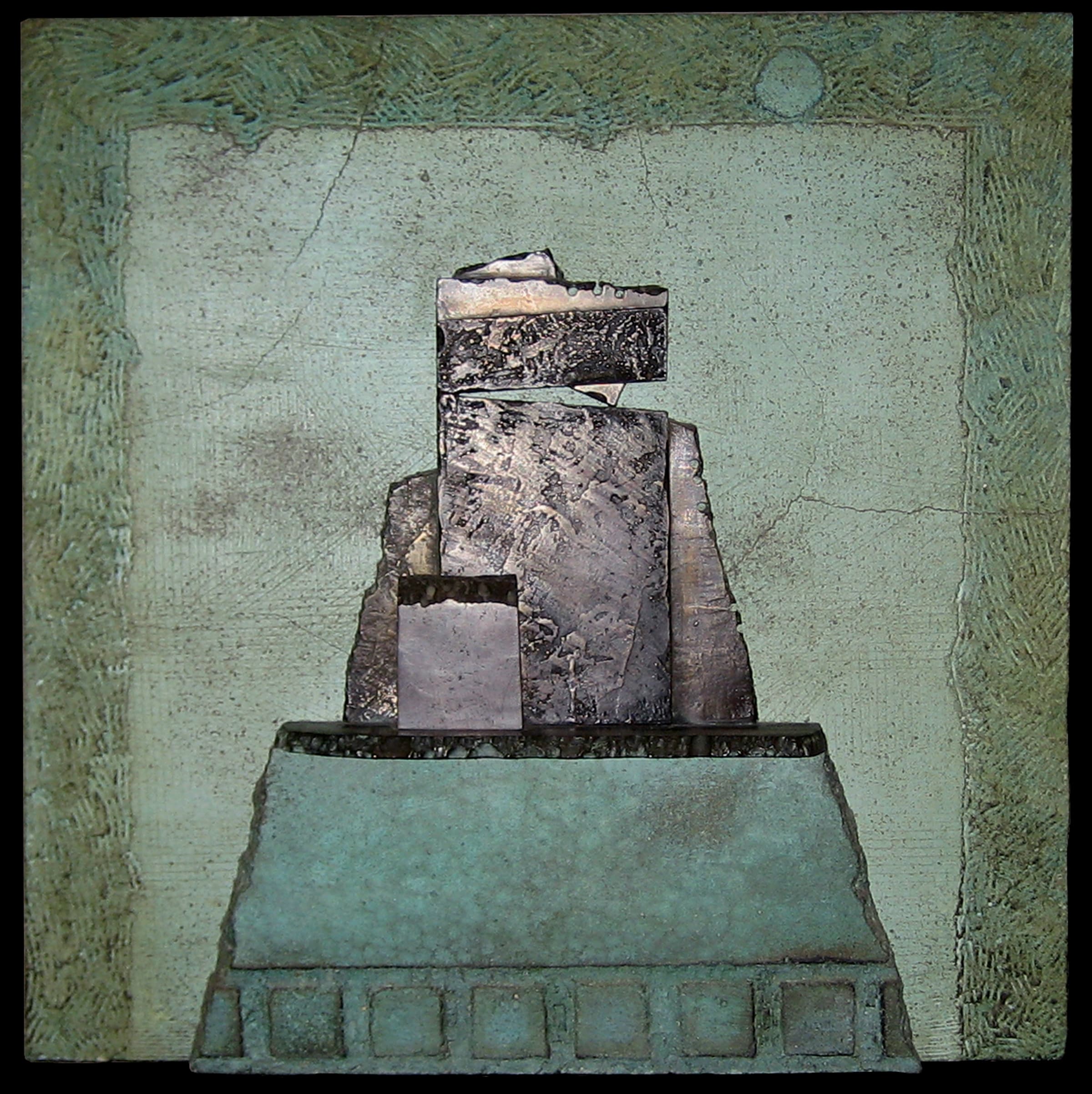
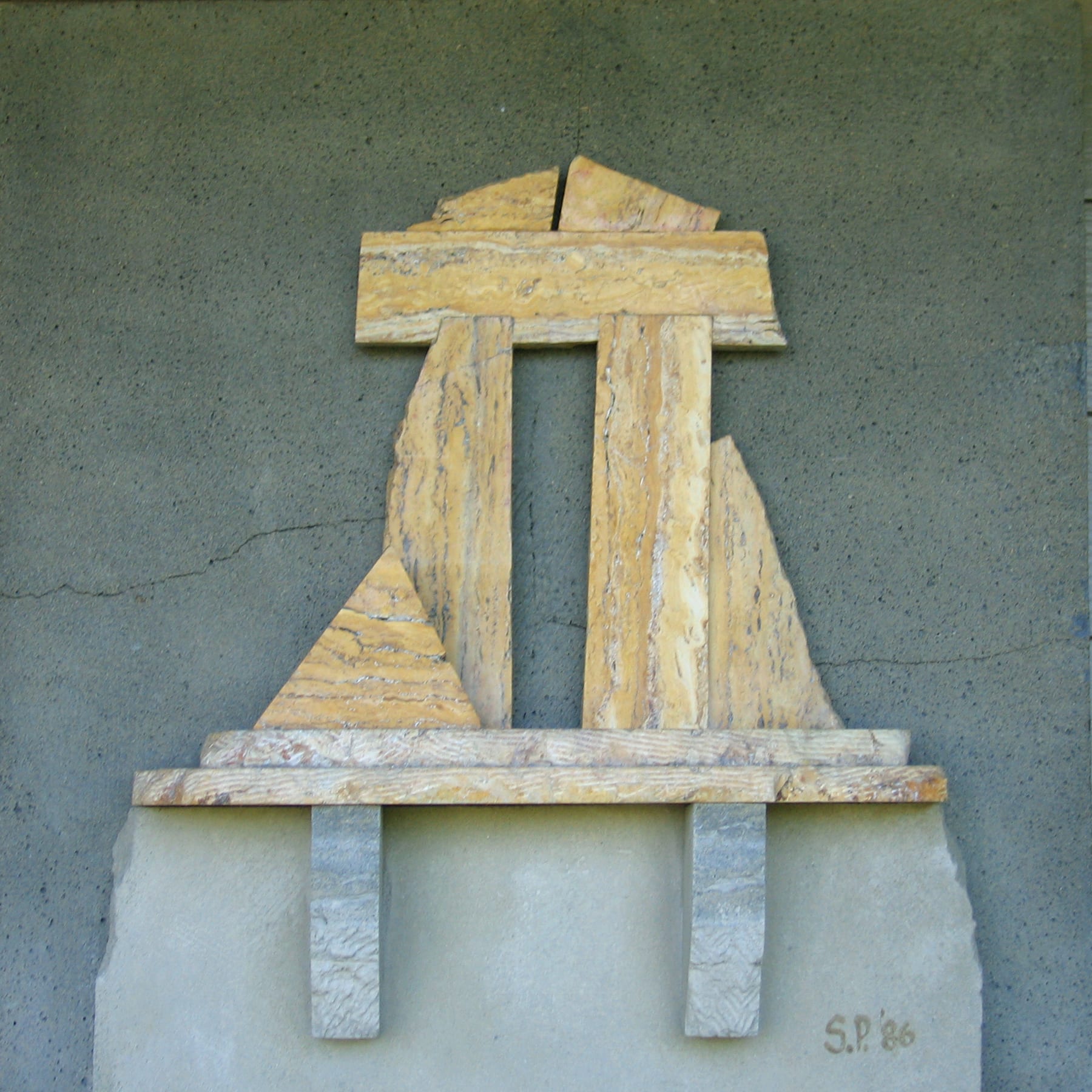
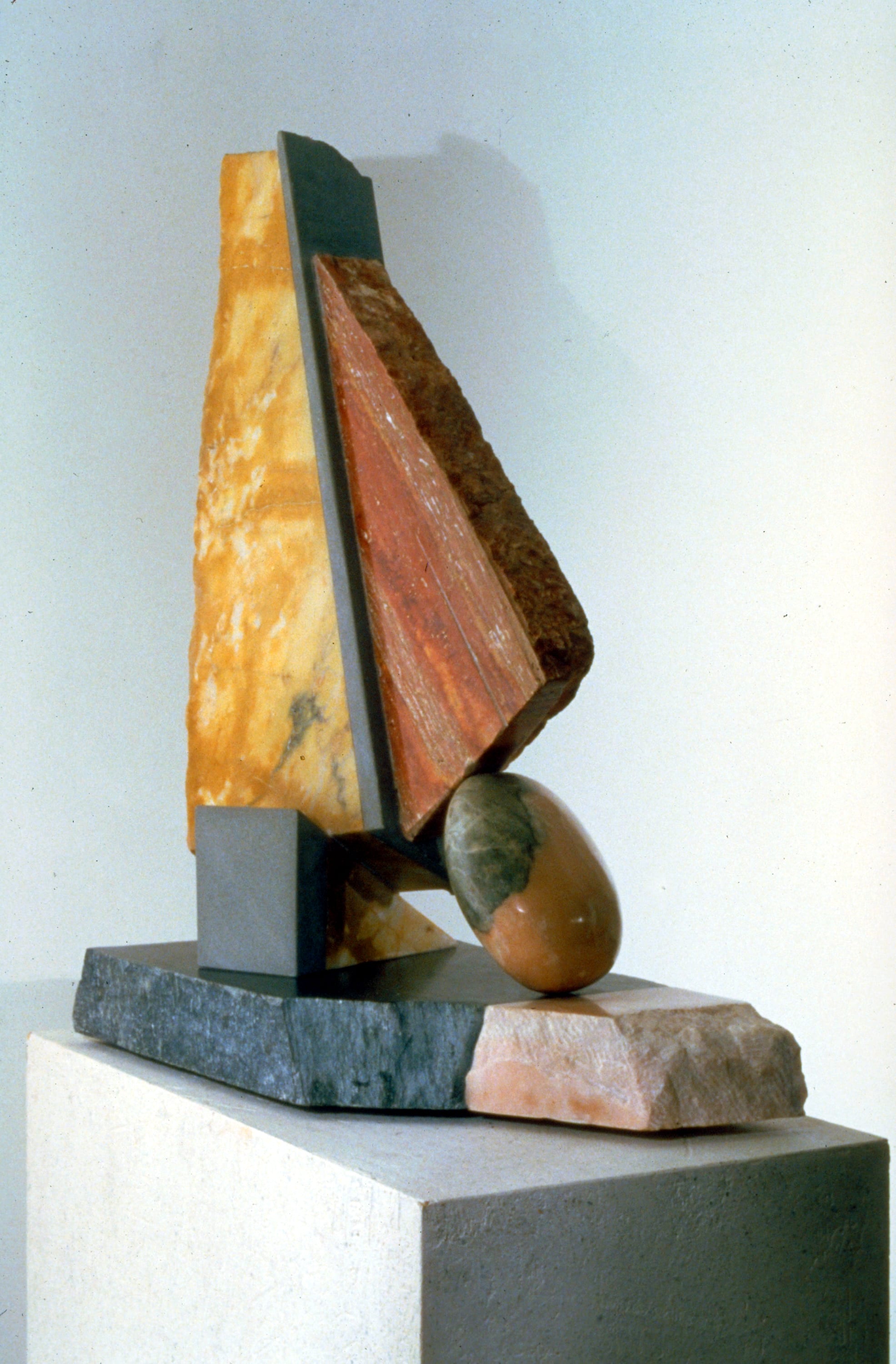
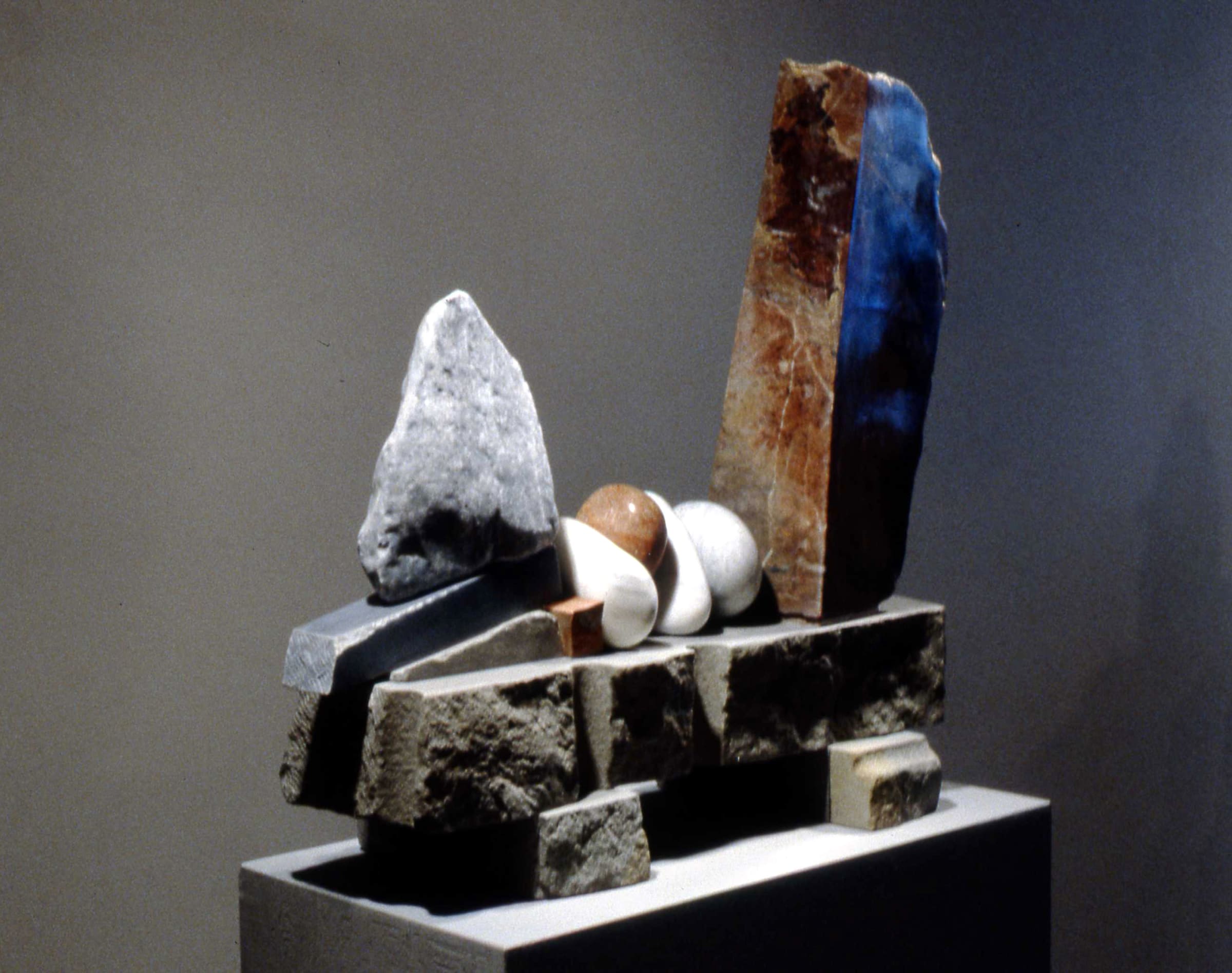
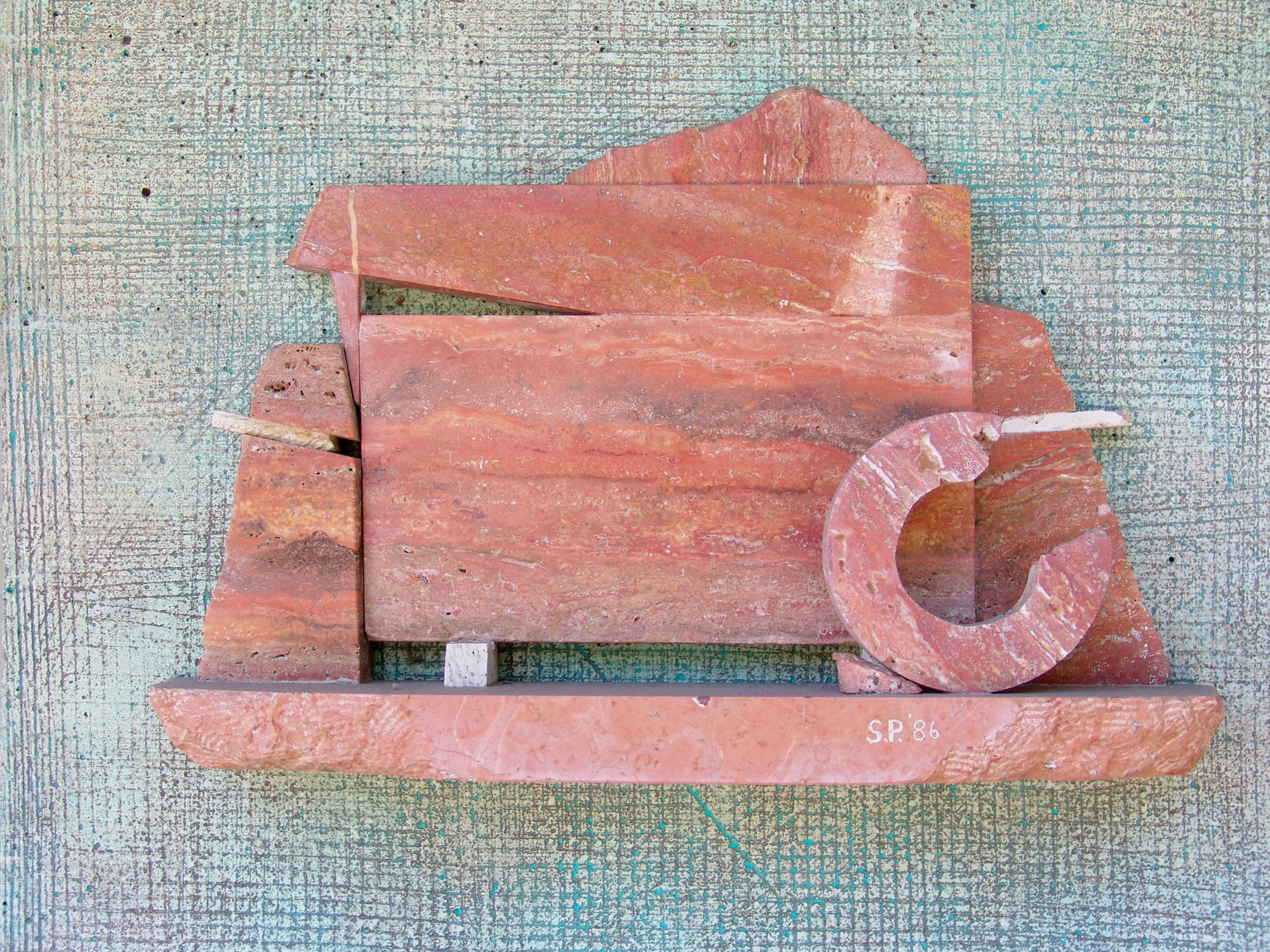
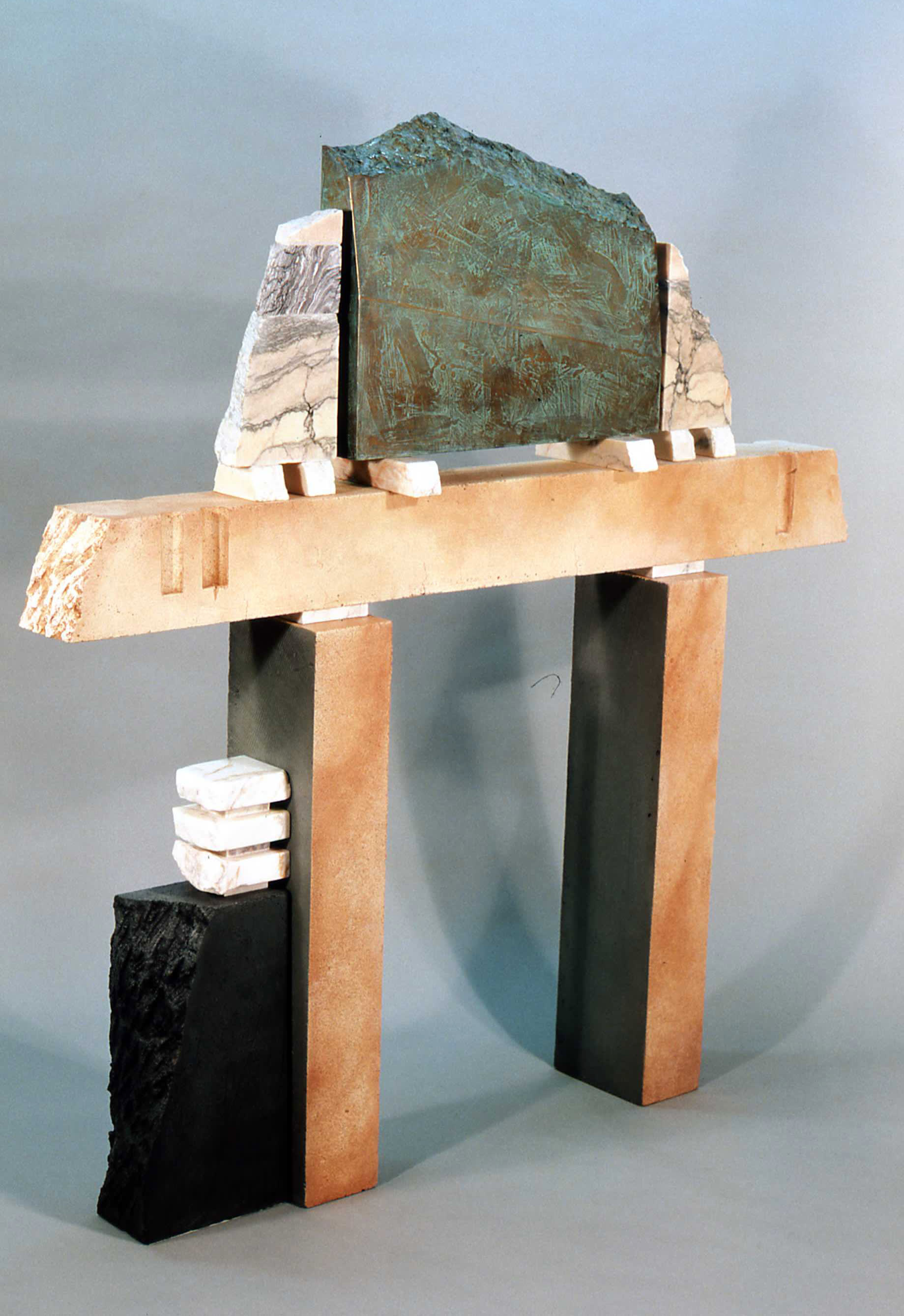
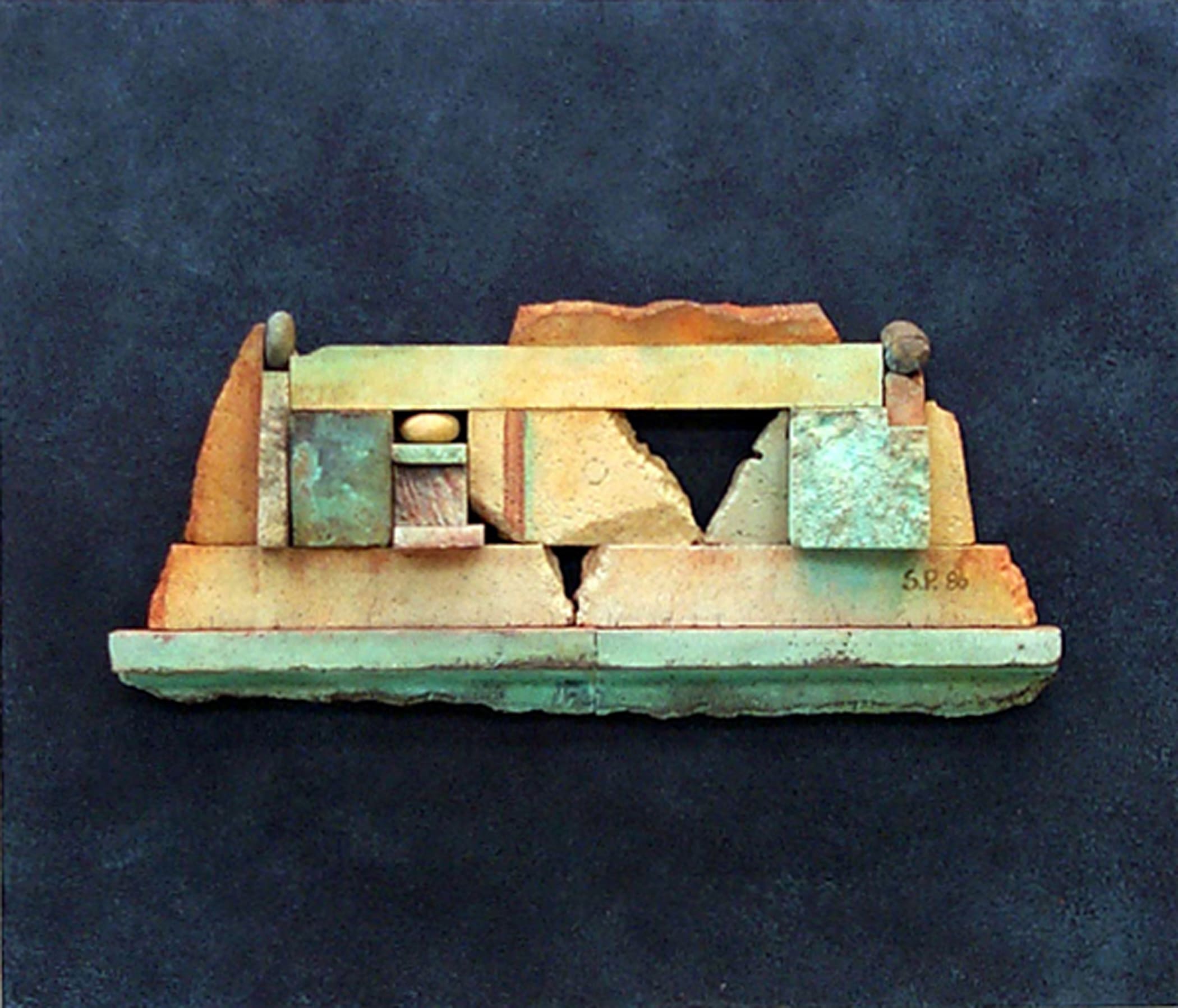
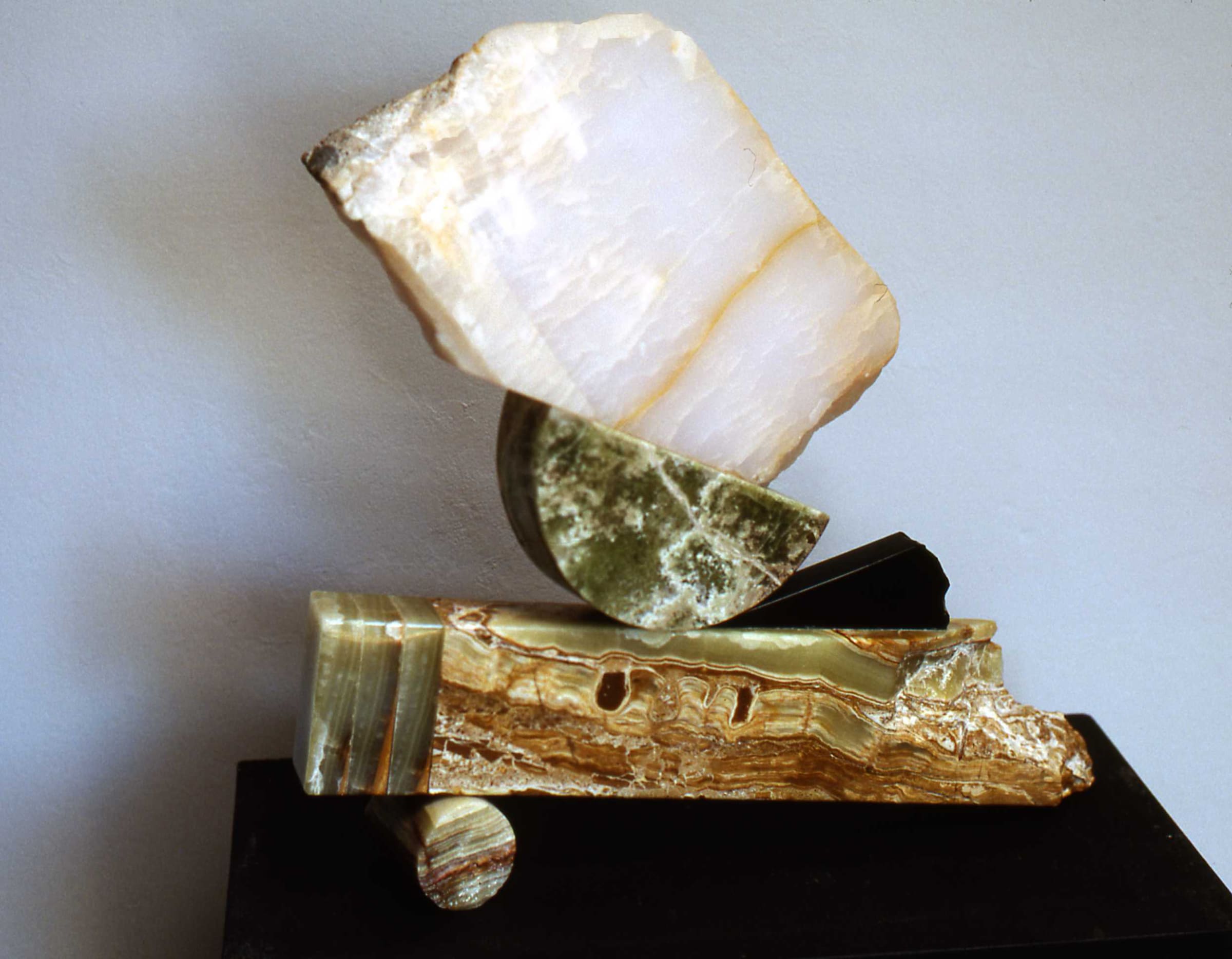
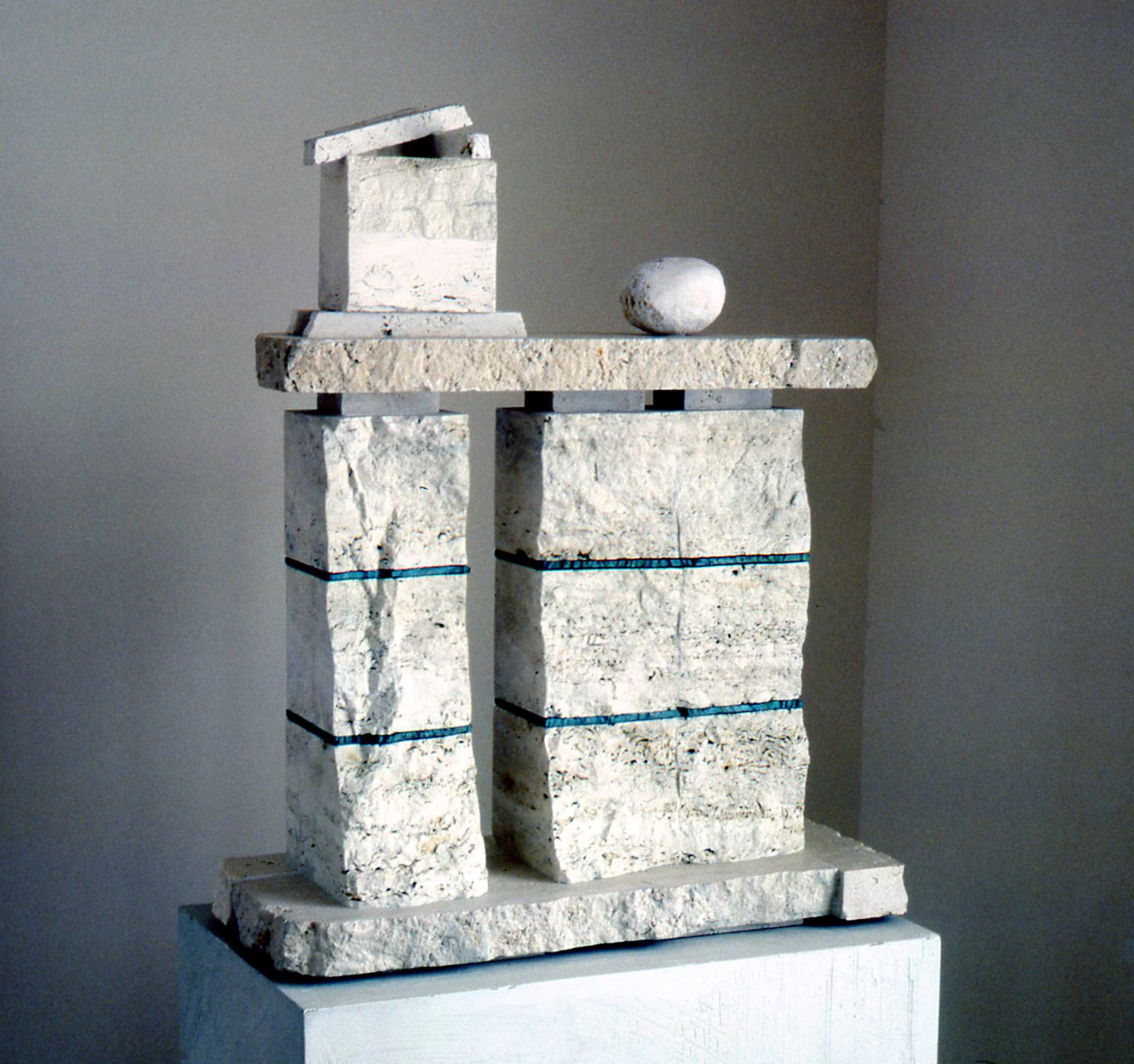
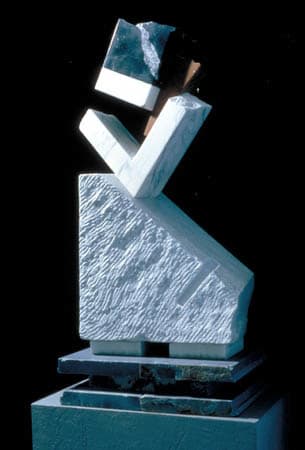
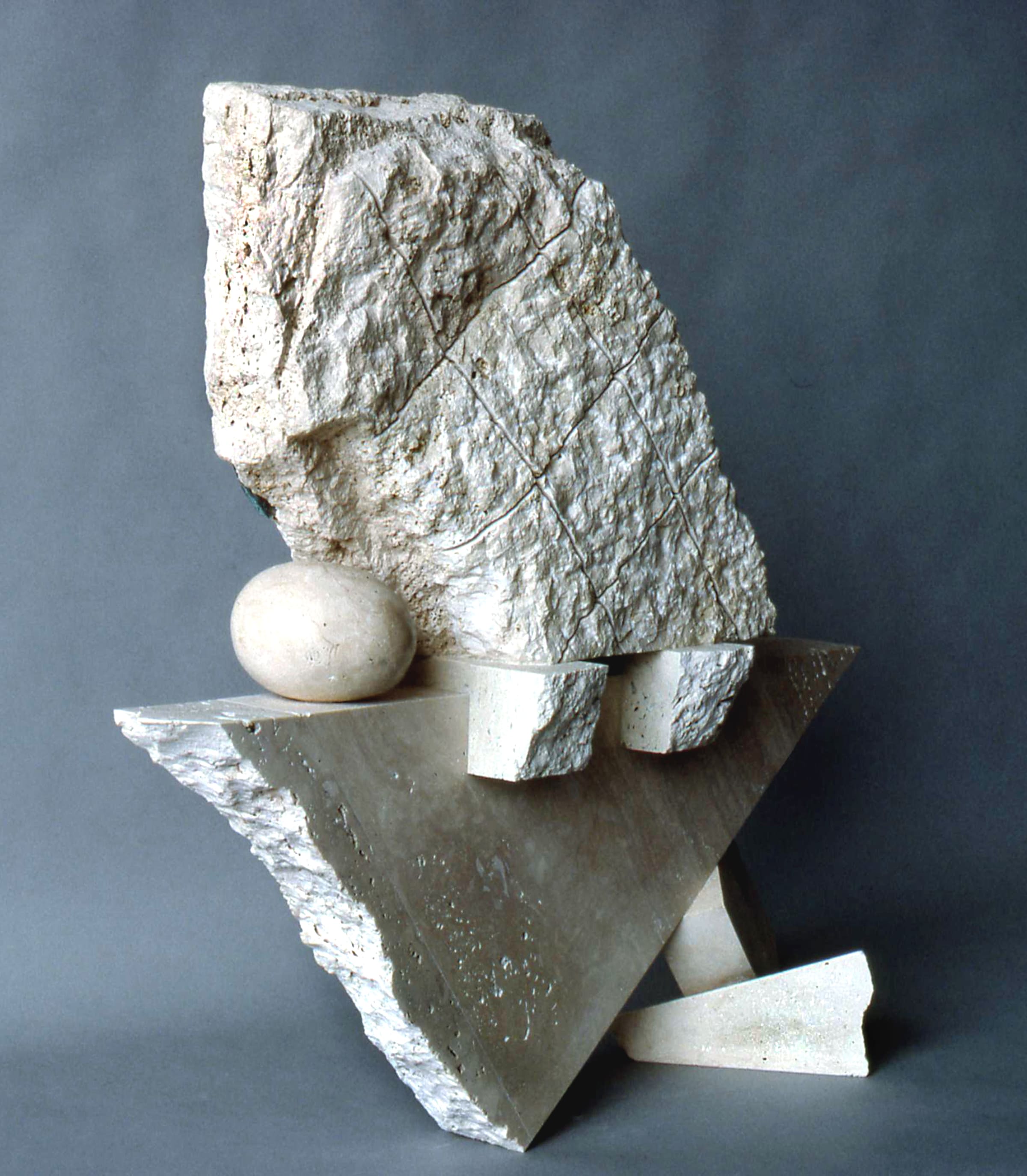
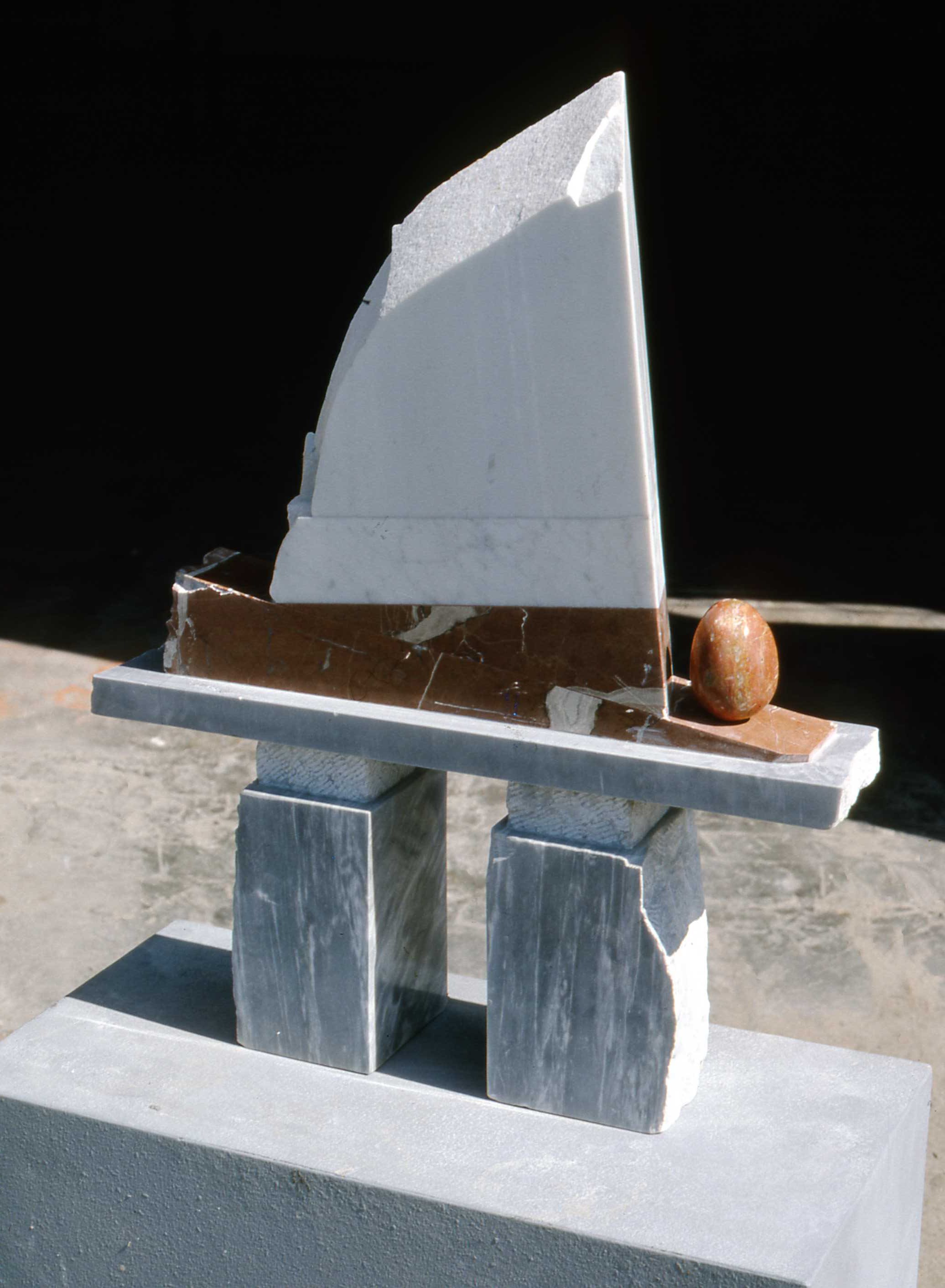
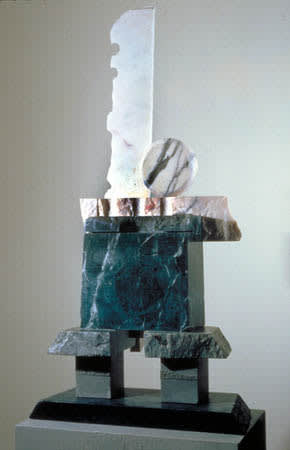
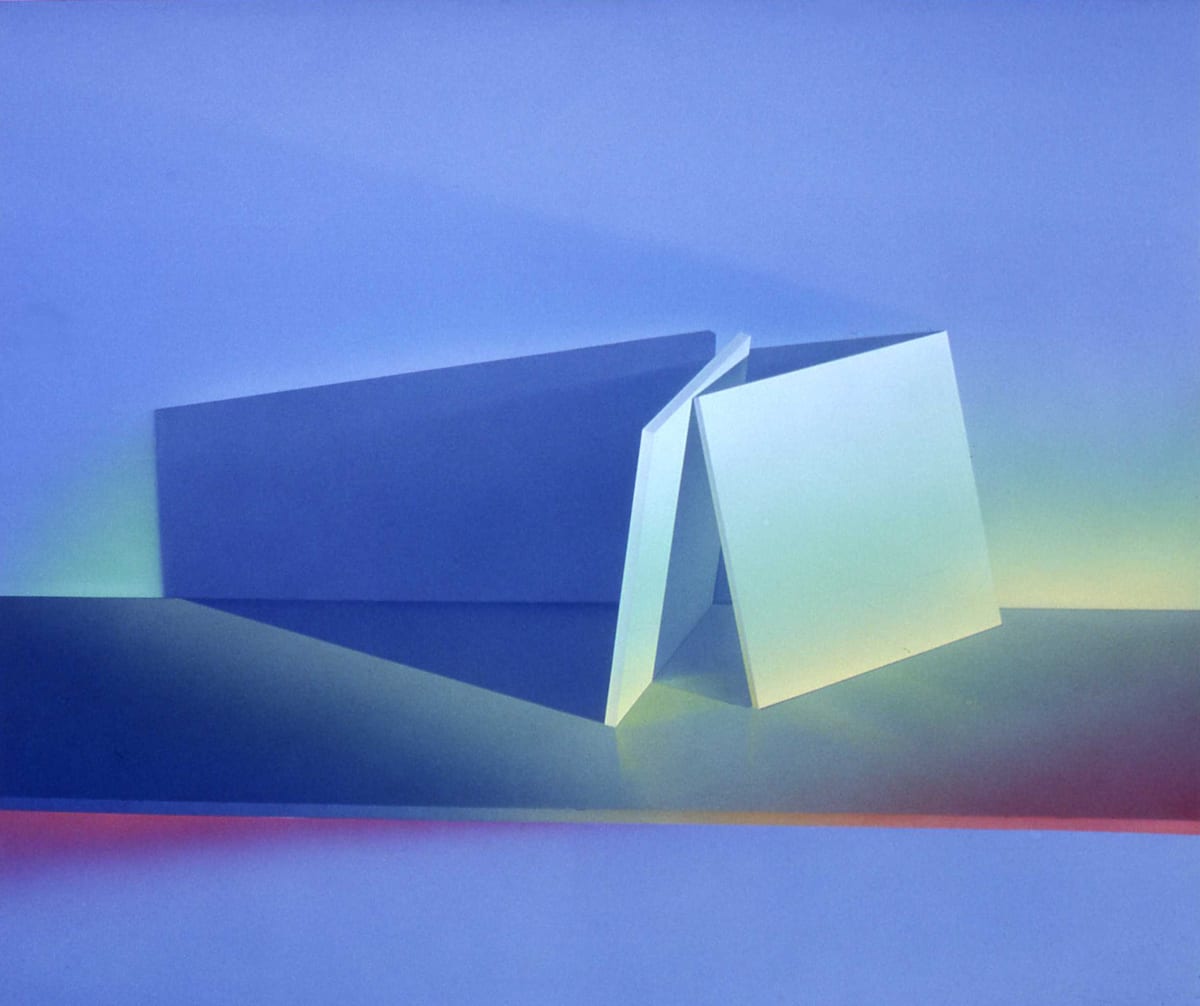
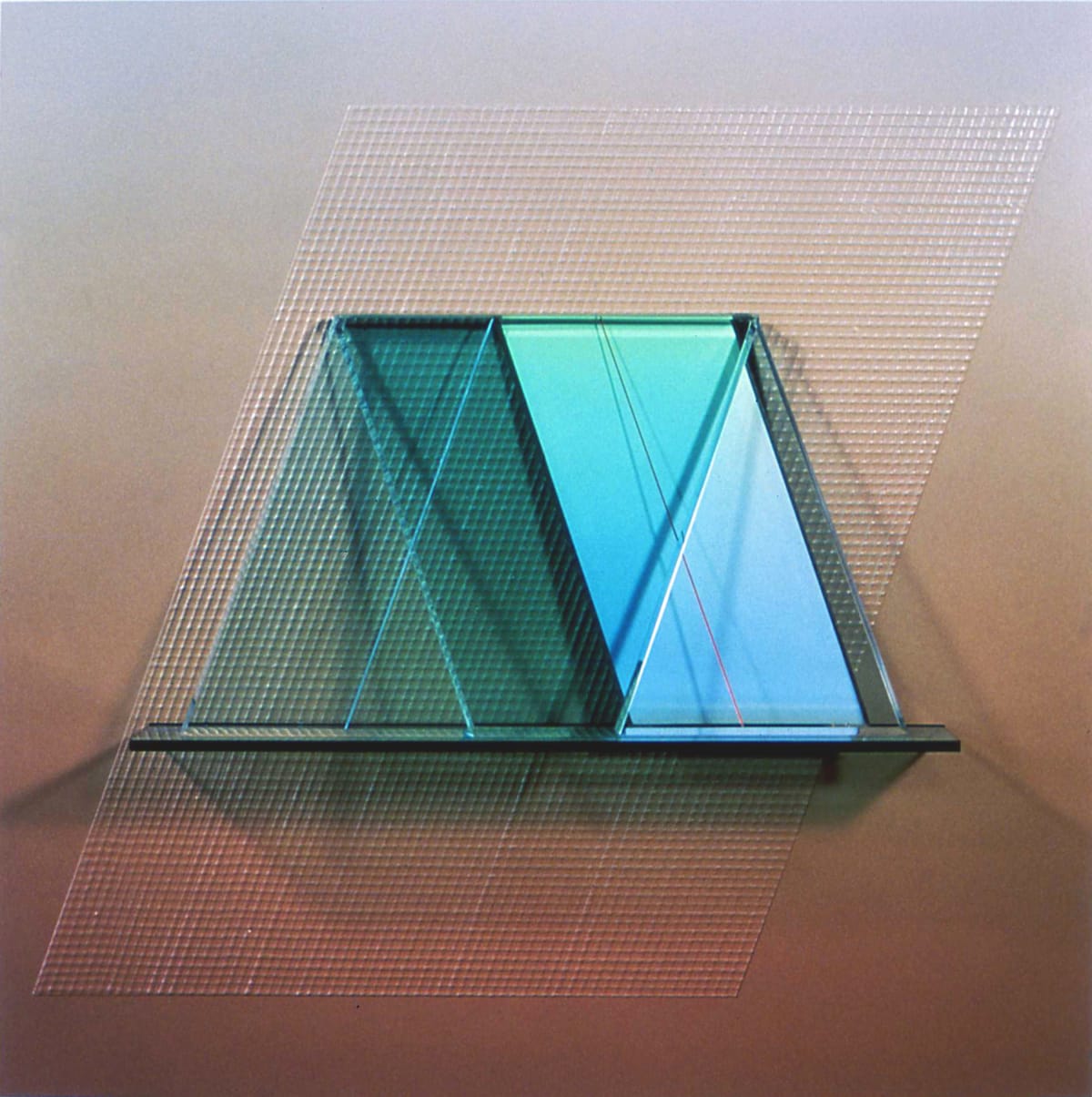
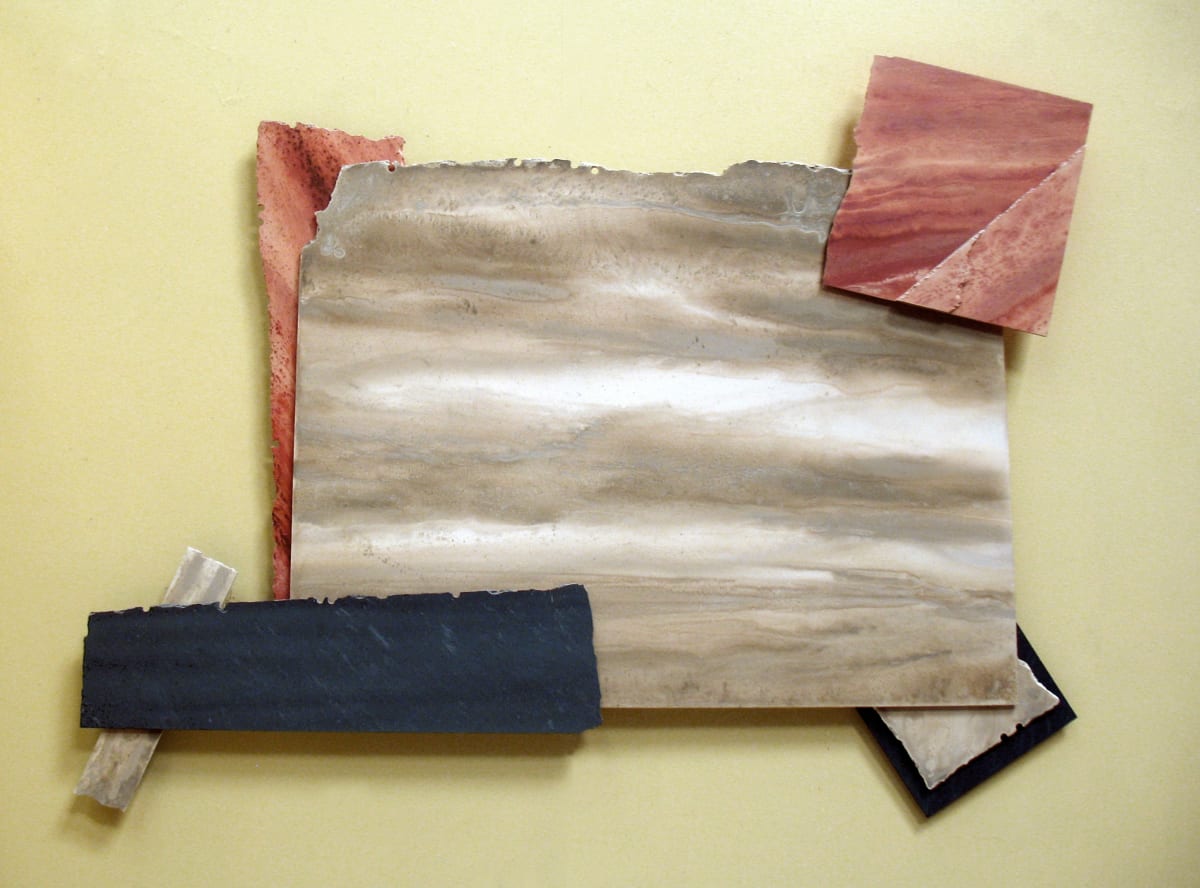
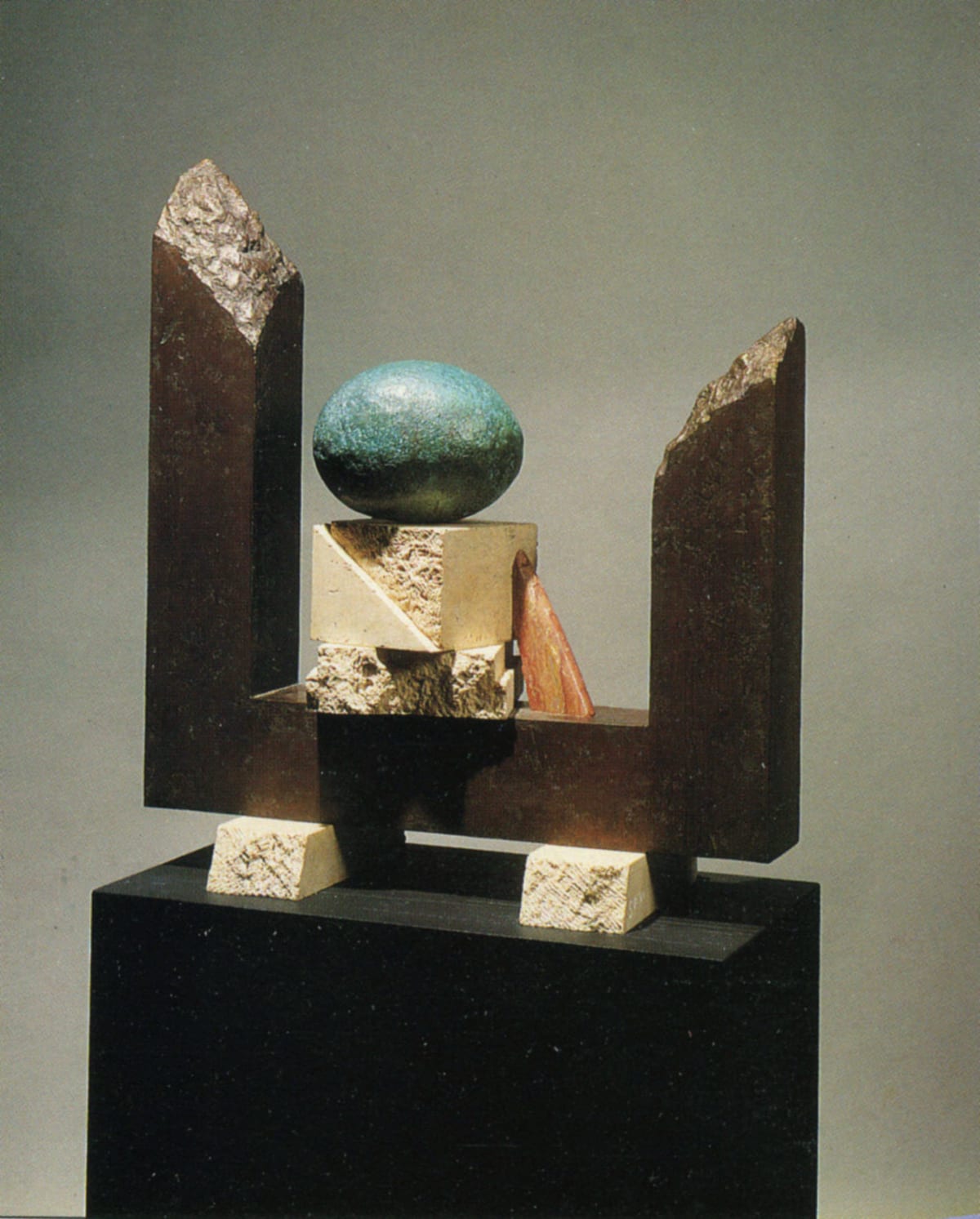
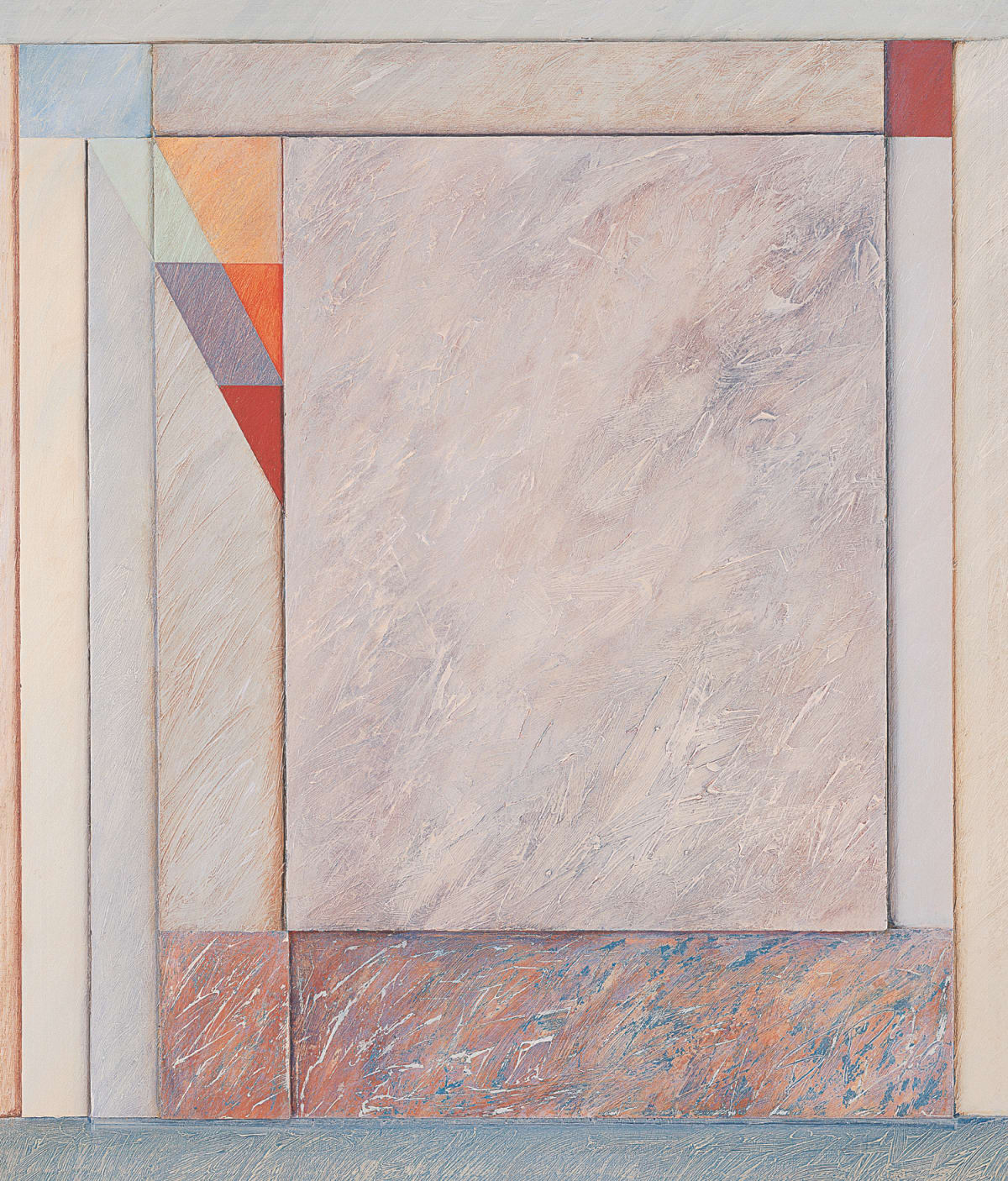
Marble proved far too heavy for small wall pieces, so the first works were built in Plexiglas and painted to imitate stone — a last use of the airbrush that had carried him since 1967. They showed at the Klein Gallery in Chicago in November 1984 alongside the first real marble from Italy. From there the work went fully three-dimensional: cast stone of his own recipe, cement, and vermiculite, stained with acrylic or oxidized with cupric nitrate under a propane torch; travertine, onyx, bronze; discarded architectural cornice; and ovoid river stones carried down out of the Carrara mountains.
He named them for Italian towns — “Volterra,” “Rapallo,” “Erice,” “Agropoli,” “Capo d’Orlando” — and the scale ran from objects that fit on a table to “Omaggio a Tempo” at Sunnyvale Community Center, sixty feet across. The largest of all took the name of the Sicilian town his family came from, and which he would later name his Santa Cruz studio: “Studio Campobello.”